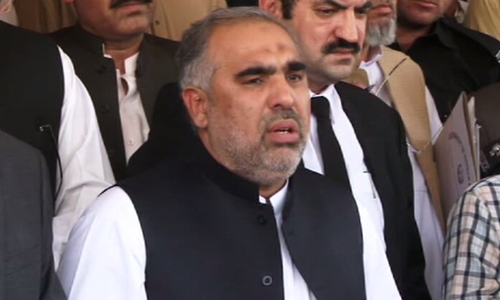
IT is a manifestation of the vicious tangle that Pakistani politics is that we are left hailing the accomplishment of a simple task by the speaker of the National Assembly. Mr Asad Qaiser on Tuesday finally wrapped up the formation of the standing and functional committees in the house, something that had been delayed for six months after the general election.
If we were to identify one hurdle in the functioning of these crucial parliamentary committees, it would have to be the disagreement on who should head the significant Public Accounts Committee. But this was not the only challenge that had to be overcome.
The basic problem is the polarisation that compels parliamentarians to hold every initiative of the other side in suspicion.
Indeed, the impression sometimes is that these lawmakers’ energy is spent on scuttling the proceedings in the Assembly rather than on ensuring parliament’s running in a disciplined, effective manner to benefit the people they represent.
Even now, when committee members have been announced, there may be objections and criticism about omissions of which a first reading of the list says there are plenty. But before that, in a typical atmosphere of mutual distrust, the establishment of these committees could well be interpreted by some as a result of a ‘deal’.
This is very unfortunate for a democracy that is still searching for firm roots and it only helps those who see democracy as a failed model beyond repair.
Many big names have been excluded from the list of nominees to these committees. Mr Asif Ali Zardari, along with his party stalwarts Raja Pervaiz Ashraf and Khursheed Shah, have not been found worthy of sitting on any National Assembly committee.
Read more: Fazl says no more interested in Nawaz-Zardari patch-up
On the other hand, whereas the PPP officials pitched him to head the crucial committee on Kashmir, Mr Bilawal Bhutto-Zardari has been named for the human rights committee, while Shahbaz Sharif has also won nomination to a couple of committees.
This could well indicate a bias for the official formula PTI spokespersons are often found to promote.
According to this formula, the current order under Prime Minister Imran Khan has no space for some ‘infamous’ old-timers, even when the political heirs to these unwanted politicians may be, willy-nilly, accommodated.
This in itself will agitate many minds, meaning that the National Assembly may continue to be a reflection of not unity but divisions in the country.
Published in Dawn, February 7th, 2019