Trump says US-China trade talks going 'very well'


 4
4


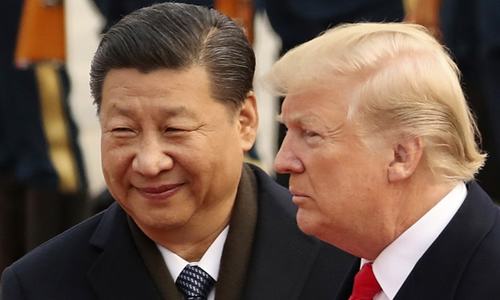
US President Donald Trump boasted Tuesday that US-China trade negotiations were going “very well” as officials held talks in Beijing that will spill into a third day.
A member of the US delegation said the two sides would resume talks on Wednesday as they continue their first face-to-face meetings since Trump and Chinese President Xi Jinping agreed to a tariff truce during a meeting in Argentina on December 1.
The talks are taking longer than expected as the Chinese commerce ministry had said last week that the meetings would take place on Monday and Tuesday.
“Talks with China are going very well!” Trump said on Twitter, but gave no further information.
The Wall Street Journal reported Tuesday the two sides were narrowing their differences, with Chinese officials offering greater purchases of US goods and services and Cabinet-level follow-up meetings expected later this month.
Word of progress briefly drove US stocks higher in early morning trading but major indices soon pared much of those gains.
The meeting between the US delegation — led by Deputy US Trade Representative Jeffrey Gerrish and including officials from the Treasury, Commerce, Agriculture and Energy Departments — and the Chinese side ran late into Tuesday night.
“I can confirm we are continuing tomorrow (Wednesday),” Steven Winberg, assistant energy secretary, told reporters after returning to his hotel in Beijing.
He declined to provide more details.
The Trump administration wants Beijing to abandon its strategy of seeking global industrial predominance through the alleged theft and forced transfer of American technology as well as massive state intervention in markets.
The truce came after the two sides imposed import duties on more than $300 billion of each other's goods.
US Commerce Secretary Wilbur Ross said Monday that China's economy was more vulnerable to the fallout from the trade war.
“It certainly has hurt the Chinese economy,” Ross told CNBC, noting that China exports many more goods to the United States than the other way around.
Ross said there was a “very good chance” of reaching an agreement, although monitoring compliance would present a challenge.
Without a resolution, punitive US duty rates on $200 billion in Chinese goods are due to rise to 25 percent from 10 percent on March 2.
Geopolitical distractions
The second day of trade negotiations coincided with an unannounced visit by North Korean leader Kim Jong Un for talks with Xi in Beijing, amid speculation of a second meeting between Kim and Trump.
Some analysts say that China — Pyongyang's key diplomatic ally and main source of trade — could use Kim's visit as a bargaining chip in the US trade talks.
But Bonnie Glaser, a senior adviser at the Center for Strategic and International Studies, said the timing of the North Korean leader's arrival could be coincidental.
“I don't see any linkage with the trade talks,” said Glaser.
“China's ability to use (North Korea) as leverage has diminished considerably since Trump opened his own channel to Kim,” she said.
Chinese foreign ministry spokesman Lu Kang said Kim's visit and the trade talks were “two separate matters”.
“China's position in the China-US trade friction and its solutions to the friction is open, it's transparent,” Lu said at a regular press briefing.
“We have shown our sincerity, we have established our stand in this, so we don't need other actions to gain the confidence of the US. The US is very clear about China's stance.”
A separate geopolitical issue angered China on Monday when a US Navy guided-missile destroyer sailed near disputed islands in the South China Sea — a vast expanse claimed by Beijing.
China called it a violation of its sovereignty that has damaged “peace, safety and order” in the waterway.
The United States periodically sends planes and warships through the area to signal to Beijing its right under international law to pass through the waters.