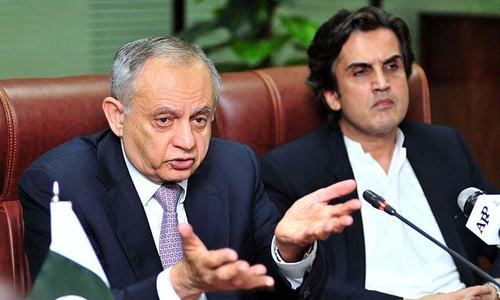
ISLAMABAD: The government on Wednesday decided to ensure “uninterrupted” supply of gas to domestic consumers, commercial units and zero-rated industries this winter and impose a ban on import of furnace oil.
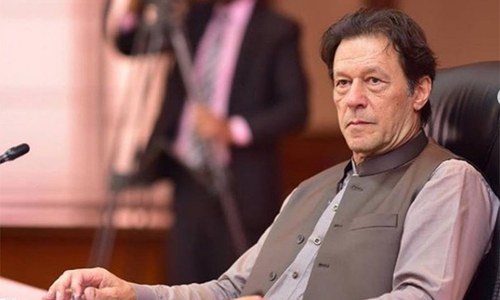
The decisions were taken at a meeting of the Cabinet Committee on Energy (CCoE) presided over by Prime Minister Imran Khan at the Prime Minister Office.
According to the PM Office, the meeting was informed that despite a sudden drop in temperature and increased demand for gas, uninterrupted supply to domestic, commercial and zero-rated industries would be ensured. The meeting was also briefed on gas management plans of the Sui Northern Gas Pipelines Limited and Sui Southern Gas Company for the winter season.
Underscoring the need for improved coordination among the relevant departments and addressing governance issues in the energy sector, the prime minister asked for timely and accurate estimations about demand and supply in the energy sector so as to avoid any interruption in energy supply.
There are complaints of gas loadshedding in almost every part of the country. Gas loadshedding, especially in Punjab and Balochistan, accompanies winter every year due to a shortage in the system. Every year authorities attempt to overcome the shortfall, yet the issue has persisted.
Cabinet Committee on Energy imposes ban on import of furnace oil
Due to non-supply of gas, the people in rural areas are compelled to cut trees and burn wood for cooking food that causes environmental degradation and smog, especially in central Punjab.
Interestingly, Minister for Petroleum Ghulam Sarwar Khan claimed in the National Assembly last week that “there is on gas loadshedding in any part of the country”.
The prime minister was briefed on the demand and supply situation in the power sector, projections of the petroleum and power division for the next six months, the existing energy mix, availability and utilisation of indigenous as well as imported gas and way forward towards addressing various issues related to the energy sector.
The meeting was informed that efforts were also being made to curtail the duration of gas loadshedding to other sectors such as compressed natural gas and captive power plants of general industries. Discussing the issue of fuel import, the meeting decided to immediately notify a ban on further import of furnace oil.
The issue of production and storage of furnace oil by local refineries was also discussed and the prime minister directed that a detailed plan regarding upgrade of the existing facilities and export of surplus furnace oil be worked out on a priority basis in consultation with the refineries.
It was decided that the Economic Coordination Committee of the cabinet would be briefed at its next meeting about the availability of urea stocks in the country and its pricing mechanism.
The CCoE meeting decided to work out a detailed plan to ensure optimal utilisation of re-gasified liquefied natural gas (RLNG) terminals. It was decided that the power division would submit to the CCoE a monthly report of power distribution companies on transmission and distribution losses and update on recoveries of receivables. The petroleum ministry was directed to submit a detailed plan on reduction of losses due to unaccounted for gas.
The prime minister directed that the policy on renewable energy be finalised by the end of January.
Privatisation of public entities
The Cabinet Committee on Privatisation met on Wednesday with Finance Minister Asad Umar in chair.
The privatisation division secretary gave the meeting an update on the privatisation process of public sector entities on the active privatisation list, including RLNG power plants (Balloki and Haveli Bahadurshah) under National Power Parks Management Company (NPPMCL), Lakhra Coal Mines and Services International Hotel. Matters relating to divestment of government’s residual shares in Mari Petroleum Company also came under discussion.
With a view to facilitating simultaneous and smooth privatisation of the two RLNG plants, the committee gave its nod for privatisation of NPPMCL. It also approved divestment of residual government shares of 18.39 per cent in Mari Petroleum Company.
About Lakhra Coal Mines, the committee was of the opinion that since the matter was sub judice, its privatisation process might be pursued only after a decision by the Supreme Court.
The committee was also updated on the privatisation process of Karachi Electric.
Published in Dawn, December 27th, 2018