BBC says omission of Kulbhushan remark from Asad Umar interview 'not an act of censorship'



After criticism from Pakistani Twitterati, the BBC on Thursday stated that the omission of Indian spy Kulbhushan Jadhav's mention from its interview with Finance Minister Asad Umar was "not an act of censorship" and that it was edited out because the programme was too long to be broadcast on TV.
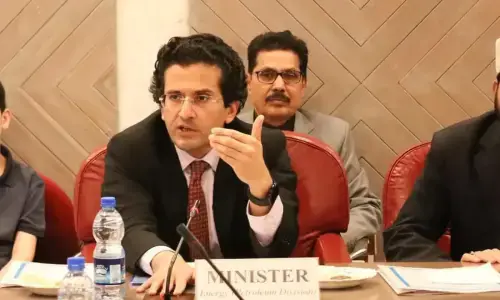
In an interview to BBC’s Stephen Sackur for the well-known show Hardtalk, the minister answered questions regarding various issues of national importance. The TV version of the interview, however, did not contain his mention of Jadhav, who was sentenced to death in 2017 by a Pakistani military tribunal for his involvement in espionage.
See: Who is Kulbhushan Jadhav?
"The reason Kulbhushan Jadhav’s name was deleted from the TV version of the HARDtalk interview with Asad Umar has a simple technical explanation," said a tweet from the programme's Twitter handle. "The recorded interview was too long for our broadcast slot and so had to be edited."
The channel said Jadhav's name had been omitted from the TV version of the interview and not the radio version, and that it was not done to censor the minister's words.
Because "clearly confusion has been caused", the broadcaster said it would restore the omitted "short section" to the programme and air the new TV version again tonight as well as tomorrow morning.
Minister for Human Rights Shireen Mazari responded to BBC's explanation, describing it as "pathetic" and saying that the organisation's "bias has always been there".
In the radio version, while answering a question regarding alleged threats to Chinese investment in Balochistan and the "anger" generated by it among some people in the province, Umar states: "This is not anger of the people of Balochistan, these are activities of sponsored terrorists who receive training, funding [and] material from outside Pakistan. And is there a serious attempt to try and destabilise Balochistan and through that, try and subvert CPEC [China-Pakistan Economic Corridor]? Of course, there is. There is a concerted effort to do that."
When pressed by the host on who these external forces were, the minister responds: "Led by India, of course. Pakistan arrested a senior operative from India, his name is Kulbhushan Jadhav; he is in the custody of Pakistan and he gave details of how the Indian intervention in Balochistan and others parts of Pakistan is taking place. So is there terrorist intervention in Balochistan? Absolutely yes, [but] what the people of Balochistan thought has been expressed through the free will of those people by electing a government of Balochistan which stands by CPEC, which wants greater engagement of CPEC in their province."
The part "Pakistan arrested a senior operative from India, his name is Kulbhushan Jadhav; he is in the custody of Pakistan and he gave details of how the Indian intervention in Balochistan and others parts of Pakistan is taking place" was omitted from the TV version of the interview by the BBC.
'Typical bias'
Earlier on Thursday, human rights minister Shireen Mazari had sharply criticised the BBC for allegedly censoring the interview and deleting the part about Jadhav, terming it "typical bias" on the part of the broadcaster.
"Shameful how BBC censored and chopped off Asad's mention of Indian spymaster Jhadav! Typical bias of BBC!" she wrote on Twitter.
Her tweet led to journalists and social media users questioning show host Stephen Sackur on Twitter whether the interview had indeed been censored.
Columnist Mosharraf Zaidi wondered if the Indian government had influenced the BBC's decision to delete Jadhav's mention.