PSX witnesses another slump as 100-index sheds 888 points in intraday trading


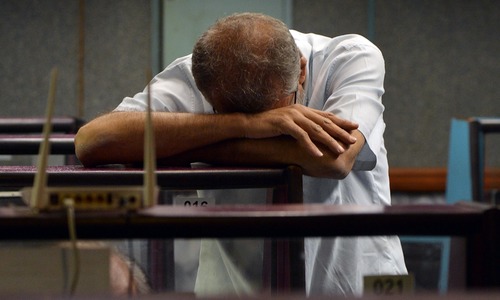
The Pakistan Stock Exchange (PSX), after staging a brief rally in the previous session, experienced another slump on Wednesday, with its benchmark KSE-100 Index losing 888 points in intraday trading — a loss of two per cent.
Trading opened at 39,607 points before the index gradually dropped to 38,719 points at around noon.
The recent bearish trend followed the State Bank of Pakistan's (SBP) decision to raise key lending rate by 150 basis points (bps) to 10 per cent as well as a fall in the value of the rupee last Friday.
The benchmark index has so far shed more than 3,000 points under the PTI government. The benchmark KSE-100 Index was at 42,447 points when the incumbent setup had came into power in August.
Factors leading to bloodbath
While the government has been pretty comfortable politically, the economy remains in the eye of the storm. The government has had to grapple with fast depleting foreign exchange reserves and ever-widening deficits.
The rupee closed at 139.06 to the dollar in the interbank market on Nov 30 — a depreciation of 3.8pc in its value.
Bankers said the rupee plunge happened as the SBP silently watched the demand for dollars rising on imports and external debt payments. It was so intense and sudden that the dollar surged to Rs144 at one point on Friday before closing lower.
Also on Nov 30, the SBP raised its key policy rate by 150 basis points to contain inflation, a product of several economic factors, most notably a weaker rupee.
Spectators and analysts, however, had expected just a 1pc hike in the policy rate, DawnNewsTV reported, adding that the increase brings the policy rate into double digits amid reports that the move is linked to talks with the International Monetary Fund (IMF) on a bailout package.
The timing of the twin moves suggests Pakistan has finally started fulfilling some pre-conditions of a fresh IMF loan, though Finance Minister Asad Umar has said he is in no hurry to get it. The government does not disagree with the Fund’s concerns on economic fundamentals, bankers and analysts say.
Also, it does not disagree with the Fund’s prescription for curing our ailing economy: let the overvalued rupee find its real market worth, minimise energy subsidies, reduce development and non-development expenses, hike interest rates — and choose economic stability over growth in the process.