Sri Lankan president dissolves parliament, calls polls on Jan 5


 7
7


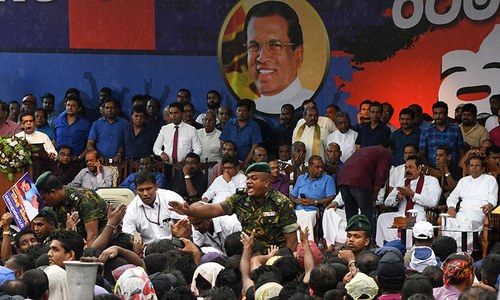
COLOMBO: Sri Lanka President Maithripala Sirisena dissolved the nation’s parliament on Friday, in a move that will likely worsen an already deep political crisis.
The president later called snap polls on Jan 5.
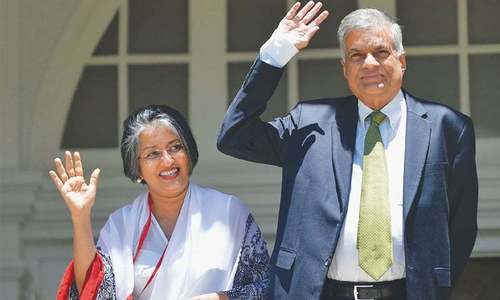
The dissolution comes after an intense power struggle in the past two weeks which followed Sirisena’s sudden sacking of Prime Minister Ranil Wickremesinghe and the appointment of former leader Mahinda Rajapaksa, a pro-China strongman, in his place.
Following the sacking, the president suspended parliament in a move which Wickremesinghe said was intended to prevent the ousted prime minister from contesting the decision in the legislature.
Later Sirisena agreed to reconvene parliament on Nov. 14, but that will now not happen.
Wickremesinghe has refused to vacate the official prime minister’s residence, saying he is the prime minister and had a parliamentary majority.
“This is a gross violation of the constitution,” Harsha De Silva, a lawmaker in Wickremesinghe’s party, said in reference to the dissolution of parliament.
Independent legal experts said parliament could be dissolved only after four-and-half-years from the date of the Aug 2015 parliamentary election, either through a referendum, or with the consent of two-third of lawmakers.
It was not immediately clear how Sirisena can legally dissolve parliament, though his legal experts have said there are provisions for him to do so.
Sirisena has said he fired the prime minister because he was trying to implement “a new, extreme liberal political concept by giving more priority for foreign policies and neglecting the local people’s sentiment”.
Published in Dawn, November 10th, 2018