US vows 'relentless' sanctions as Iran pledges to stand up to 'bullying' by Washington

The United States vowed on Monday to be “relentless” in countering Iran as sweeping sanctions took effect, but the Islamic republic defiantly promised to stand up to the “bullying” by Washington.
President Donald Trump's administration nonetheless issued eight exemptions from its demand on all countries to stop buying Iranian oil, the country's largest export, amid bitter international opposition to the unilateral US sanctions.
Six months after Trump pulled out of an international agreement on ending Tehran's nuclear program, Secretary of State Mike Pompeo said the ultimate US goal was for Iran to make a “180-degree turn” and abandon its “revolutionary course.”
While stopping short of urging regime change, he reiterated demands for Iran to end policies rooted in the 1979 Islamic revolution including its support for regional proxies such as the Lebanese militia Hezbollah and its development of missiles.
“We hope a new agreement with Iran is possible, but until Iran makes changes in the 12 ways I listed in May, we will be relentless in exerting pressure on the regime,” Pompeo said.
He said the sanctions — which took effect on the 39th anniversary of Iranian zealots' seizure of the US embassy following the ouster of the pro-US shah — intended to “starve the Iranian regime of the funds it uses to fund violent activity throughout the Middle East and around the world.” UN inspectors say Iran is abiding by an agreement reached with Trump's predecessor Barack Obama to draw down its nuclear program. That deal was backed by European powers, Russia and China and sealed by a UN Security Council resolution.
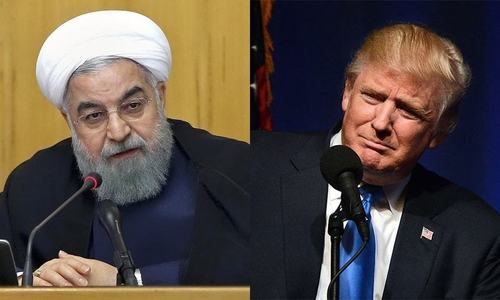
“I announce that we will proudly bypass your illegal, unjust sanctions because it's against international regulations,” Iran's President Hassan Rouhani said in a televised speech as the sanctions took effect.
“We are in a situation of economic war, confronting a bullying power. I don't think that in the history of America, someone has entered the White House who is so against law and international conventions,” he added. In one of Tehran's bazaars, there was anxiety over the future.
“The shadow of the sanctions has already affected the economy in a disastrous way, people's purchasing power has plunged,” said Ehsan Attar in his herbal remedy shop.
'Act on your commitments'
Rouhani said four countries had approached him during his visit to New York for the UN General Assembly in September, offering to mediate with the US but he turned them down.
“There is no need for mediation. There is no need for all these messages. Act on your commitments, and we will sit and talk,” he said.
But Foreign Minister Mohammad Javad Zarif, in an interview published on Monday with USA Today, said Iran would consider fresh diplomacy if there were a “different approach” by Washington.
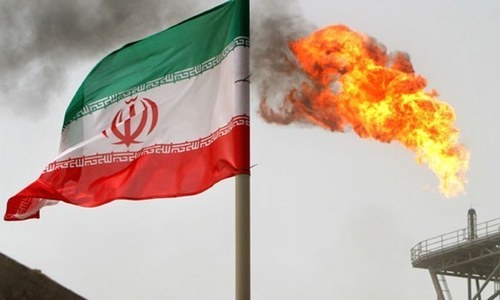
The latest tranche of US sanctions aims to significantly cut Iran's oil exports — which have already fallen by up to one million barrels a day since May — and cut off its banks from international finance.
The Belgian-based SWIFT banking network, the backbone for international monetary transfers, said Monday it had suspended several Iranian banks from its service.
The International Monetary Fund forecasts that US sanctions will cause Iran's economy to contract 1.5 per cent this year and 3.6 per cent next year — pain that Trump has boasted about as he touts his record ahead of Tuesday's congressional elections.
Iran's economy was already suffering major structural problems — including widespread corruption, weak investment and a banking sector laden with toxic assets — before Trump walked out of the deal.
Rouhani's plan since his election in 2013 was to boost the economy by rebuilding ties with the world and attracting billions of dollars in foreign investment — a strategy that now looks in tatters.