13
13
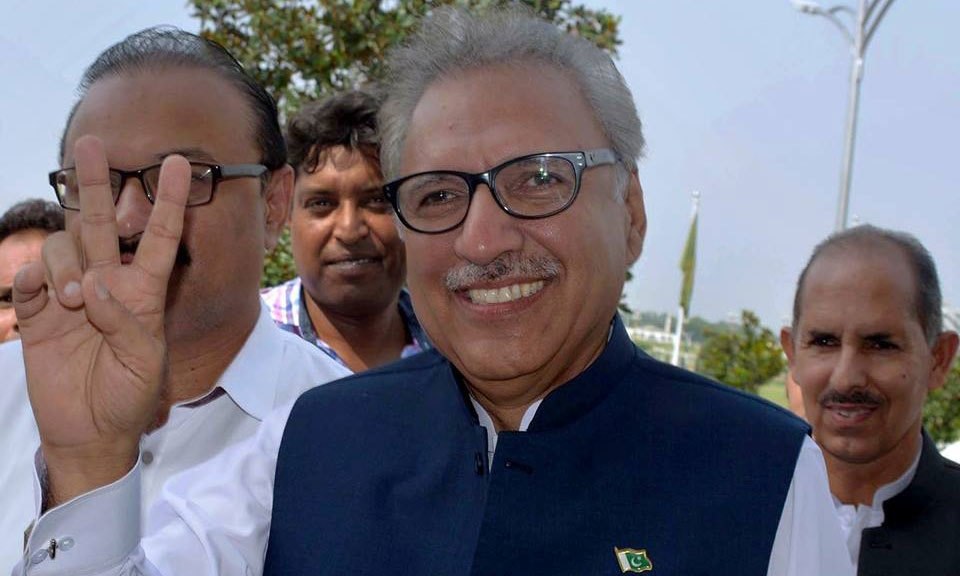

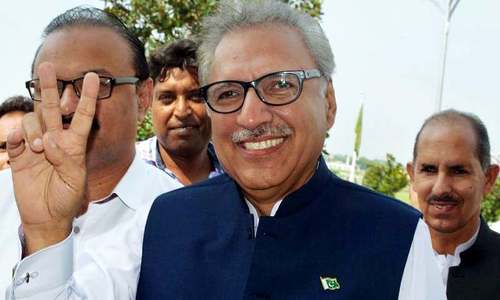
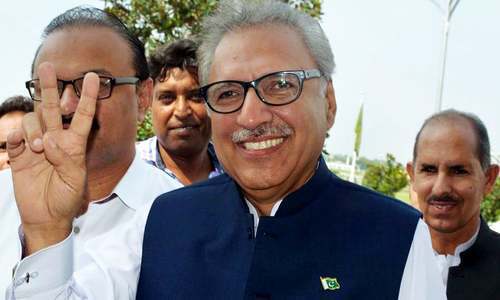
Responding to criticism, President Arif Alvi on Thursday tweeted that he "did not want or ask for immunity" in a case related to the 2014 dharna, in which proceedings against him have been suspended under Article 248(2) of the Constitution.
Taking to the microblogging website, President Alvi said: "I did not want or ask for immunity. However, the honourable judge is bound by Article 248(2) which does not give him any choice as it states 'No criminal proceedings whatsoever shall be instituted or continued against the president or a governor in any court during his term of office'."
The case in question was registered against President Alvi under different sections of the Anti-Terrorism Act (ATA) and the Pakistan Penal Code (PPC) for allegedly inciting violence during the 2014 sit-in in the federal capital.
After assuming the office of president, Dr Alvi had said that he would not seek immunity. However, his counsel Mohammad Ali Bukhari had pointed out that the office of the president enjoyed constitutional immunity from criminal proceedings under Article 248, and he therefore had no say in the matter.
An anti-terrorism court (ATC) of Islamabad had yesterday suspended proceedings against President Alvi till he holds office.
Prime Minister Imran Khan, who is also accused in the case, has been granted permanent exemption by the ATC after his counsel, Dr Babar Awan, assured the court that he would represent PM Khan in every hearing of the case.
2014 dharna
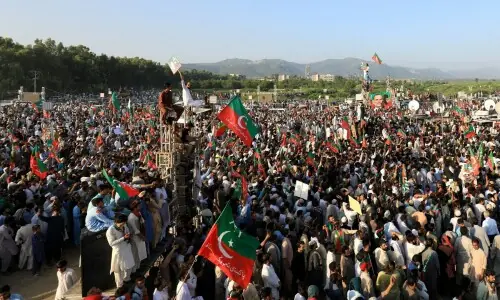
On Aug 31, 2014, PTI and Pakistan Awami Tehreek (PAT) workers had marched towards Parliament House and Prime Minister House and clashed with police deployed on Constitution Avenue.
Around 50 protesters, allegedly from the PTI and PAT, were accused of attacking and injuring SSP Asmatullah Junejo the next day.
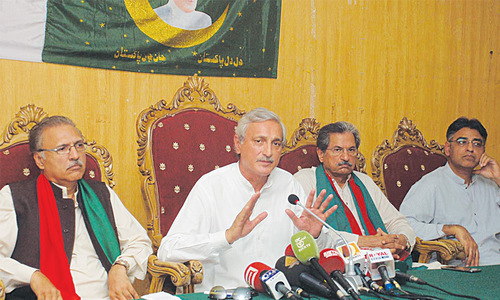
Police had subsequently invoked the ATA against Pakistan Tehreek-i-Insaf (PTI) leaders Khan, Alvi, Asad Umar, Shah Mehmood Qureshi, Shafqat Mehmood and Raja Khurram Nawaz for inciting violence during the 2014 sit-in.
As per the prosecution, three people were killed and 26 injured, while 60 were arrested. The prosecution had submitted 65 photos, sticks, cutters, etc, to the court to establish its case.
The prosecution had argued that the protest was not peaceful and the PTI leaders sought bail after three years.
In addition to unidentified attackers, police had also nominated Imran Khan and PAT chief Dr Tahirul Qadri as accused in the case. The ATC declared them proclaimed offenders in November 2014 as they did not appear before the court despite issuance of summons and arrest warrants.
Police had initially arrested six people for their involvement in the alleged attack.
In July last year, the ATC had declared them absconders and started the process of confiscating their movable and immovable properties.
In May this year, the ATC had acquitted Khan from the SSP torture case.
In the case related to attacks on the Parliament House and PTV building, however, the court is yet to issue a proclamation against the accused.