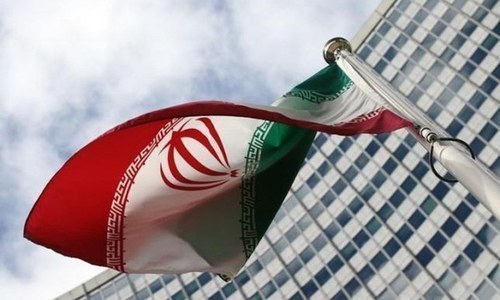
The United States told UN judges on Tuesday they had no jurisdiction to rule on Tehran's demand for them to order the suspension of debilitating nuclear-related sanctions against Iran.
Washington cited security concerns in its first legal response to a suit by the Islamic Republic, which is suffering increasing economic chaos.
Iran has argued that US President Donald Trump breached a 1955 treaty with his decision to reimpose the sanctions after withdrawing from a multilateral nuclear accord.
But US State Department lawyer Jennifer Newstead told the International Court of Justice in The Hague that it “lacks prima facie jurisdiction to hear Iran's claims”.
She argued that the United States had the right to protect its national security and other interests.
The treaty “cannot, therefore, provide a basis for this court's jurisdiction” in the case, she said.
Sanctions on Iran had been lifted under a landmark 2015 accord with the five permanent members of the UN Security Council plus Germany. In return, Tehran made commitments not to seek to develop nuclear weapons.
But Trump said the deal did not do enough to curb the threat from Iran.
He pulled out of the accord in May and began reimposing sanctions this month, alarming other signatories to the deal.
In the first day of hearings at the ICJ on Monday, Iran's lawyers said the sanctions were threatening the welfare of its citizens and disrupting tens of billions of dollars' worth of business deals.
The US lawyers held Iran to blame for its economic woes.
They have “deep roots in the Iranian government's mismanagement of its own economy and repression of its own population,” Newstead said.
Oil sanctions coming
Trump says the sanctions are needed to ensure Iran never builds a nuclear bomb. He accuses it of supporting terrorists.
The Islamic Republic's lead representative in the case, Mohsen Mohebi, branded the sanctions “naked economic aggression”.
“The United States is publicly propagating a policy intended to damage as severely as possible Iran's economy and Iranian nationals and companies,” Mohebi said.
“Iran will put up the strongest resistance to the US economic strangulation, by all peaceful means.” US Secretary of State Mike Pompeo on Monday dismissed Iran's claims as “meritless”.
The US measures have added to Iran's economic woes, fuelling strikes and protests across the political spectrum.
Iran's currency has lost around half its value since April.
Also read: Erosion in lira’s value points to bigger problems
The sanctions target financial transactions and imports of raw materials, cars and aircraft among other sectors.
International companies including French oil firm Total and Germany's Siemens have suspended operations in Iran since Trump's announcement in May.
A second wave of punitive measures is due to hit the OPEC member state in early November, targeting its vital energy sector including oil exports.
History of litigation
Iran's lawyers have asked the court urgently to order the suspension of the sanctions pending a definitive ruling.
Newstead argued that Iran had a broader aim to “reinstate sanctions relief” altogether -- a matter she said was beyond the court's remit.
The court adjourned after Tuesday's hearing until Wednesday when Iran will have the opportunity to respond to the US arguments.
The ICJ is expected to take several weeks to decide whether to grant Tehran's request for a provisional ruling. A final decision could take years.
ICJ judgements are binding, final and without appeal.
However, whether any decision will be implemented remains unclear.
Both Iran and the US in the past have ignored ICJ rulings against them.
Despite the 1955 Treaty of Amity and Economic Relations, the two countries have not had diplomatic ties since 1980.