NEW DELHI: Amid signs of thaw with Pakistan, Indian Prime Minister Narendra Modi on Wednesday distanced himself from a militarist line on Jammu and Kashmir, saying he would seek peace in the disputed region by embracing its people.
In his speech on the Independence Day at the Red Fort in New Delhi, he said his government was following the teachings of former prime minister Atal Bihari Vajpayee.
“Atalji called for ‘insaniyat’ (humanity), ‘Kashmiriat’ (eclectic Kashmiri culture) and ‘jamhooriyat’ (democracy). I also said that the issues in Kashmir can be resolved by embracing the people of Kashmir.”
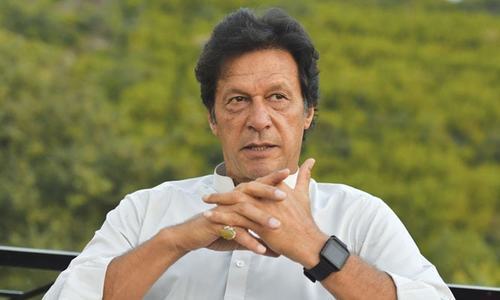
The comments came a day after Islamabad’s envoy in Delhi lauded Mr Modi’s phone call to prime minister-in-waiting Imran Khan to greet him on his party’s victory in the general elections.
Reports suggest China is keen to help improve ties between Islamabad and Delhi
A week ago, the Chinese envoy in Delhi visited the Wagah border in an unusual move where he declared his country’s support for improved ties between India and Pakistan.
Mr Modi said his government was committed to the all-round development of all sections and regions in Jammu and Kashmir, the country’s only Muslim-majority state.
He said Jammu and Kashmir, now under Governor’s Rule, would hold the much-awaited Panchayat and local body elections. He did not say when.
Pakistan’s High Commissioner to India Sohail Mahmood said on Tuesday that Mr Modi’s call to Pakistan Tehreek-i-Insaf (PTI) chief to congratulate him was a positive development.
He expressed the hope that such steps could lead to betterment of ties.
“Prime Minister Narendra Modi calling PTI chairman Imran Khan after the results of the general elections is another positive development. And it is hoped that such positive developments will lead to the betterment of ties between the two countries,” Mr Mahmood said during an event at the chancery to mark the country’s Independence Day.
The envoy was quoted by Indian Express as emphasising that “peaceful relations” with all Pakistan’s neighbours, including India, were accorded “high priority” in the foreign policy vision outlined by the incoming leadership in Pakistan.
During the celebrations, the envoy hoisted his country’s flag to the tune of the Pakistan national anthem. As people greeted each other, students of the Pakistan High Commission School presented a medley of songs.
The Express quoted a statement issued by Pakistan High Commission as expanding his thoughts on the ties.
According to the statement, Mr Mahmood pointed out that the peculiar trajectory of India-Pakistan relations over the past seven decades had often led to political and military tension and prevented the two countries from realising their optimal potential in socio-economic development.
“Our next generations deserve a better future — one marked by peace and opportunities for progress and prosperity,” he said.
He also hoped that South Asia would “turn a corner” and be known in the world “not for confrontation, but for cooperation”.
Along with deepening of democracy in Pakistan, “impressive strides” were being made in the fight against the scourge of terrorism, Mr Mahmood added.
Meanwhile, according to an analysis of the India-Pakistan ties in the Indian Express on Tuesday, China is keen to help improve ties between the two countries.
It said Ambassador Luo Zhaohui last week visited Amritsar and Wagah, and spoke of improved ties between India and Pakistan.
“Besides wearing a turban, drinking lassi, chatting with farmers and paying obeisance at the Golden Temple, Ambassador Luo went to the Indo-Pak border at Attari-Wagah,” the Express said.
“After watching the popular flag-lowering ceremony, Mr Luo tweeted his hope for “peace, friendship and cooperation” between India and Pakistan.
“Such sentiment, of course, runs against Delhi’s traditional wariness on China’s role in India-Pakistan relations over the last many decades,” the analysis noted.
“Sceptics might say Luo’s hope is less about articulating China’s policy than the envoy’s well-known high-octane diplomatic style. A number of factors, however, might be at work in the north-western Subcontinent to nudge the narrative on the triangular relationship in a more positive direction.”
Published in Dawn, August 16th, 2018