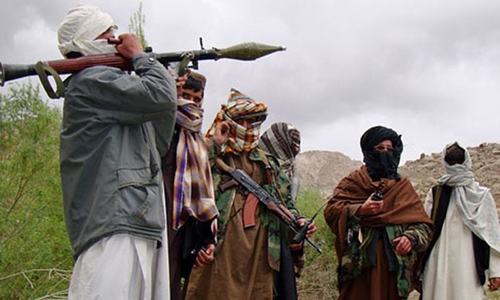
Taliban fighters killed a governor and took control of his district in northern Afghanistan as clashes broke out across the country, officials said on Tuesday, accusing the militants of defying the start of a government ceasefire with them.
There was intense fighting between Afghan security forces and Taliban gunmen in the northern provinces of Faryab and Sari Pul, with officials reporting an unspecified number of casualties on both sides.
The governor of Kohistan district in Faryab was killed along with eight others in an ambush overnight, provincial governor spokesman Jawed Bidar told AFP, blaming the Taliban.
He said the militants had seized control of the district. That was confirmed by provincial police chief Nabi Jan Mullah Khail.
The Taliban claimed the Faryab attack as well as one in Sayad district of neighbouring Sari Pul where provincial governor spokesman Zabiullah Amani said fighting was still underway.
“Last night large numbers of Taliban attacked several villages... the fighting continues and both sides have casualties,” Amani told AFP. “We have asked for more reinforcements.”
A suicide bomber driving a Humvee and gunmen also attacked a district government building in the southeastern province of Ghazni overnight, killing five people, all police officers, and wounding 26, including the district governor, provincial governor spokesman Arif Noori told AFP.
Noori blamed the Taliban for the attack, although no group has so far claimed responsibility.
“The ceasefire went on effect this morning,” interior ministry spokesman Najib Danish said.
“We have ordered our forces to defend with all their power if they are attacked by an enemy that has no respect for anything.” The attacks come as Pakistan's powerful army chief General Qamar Javed Bajwa visits Kabul where he was set to meet with President Ashraf Ghani, Pakistan's military spokesman Major General Asif Ghafoor said.
Pakistan has long been accused of supporting the Taliban and providing safe haven to its leaders — charges Islamabad denies.
Ghani on Thursday announced police and troops would halt hostilities with the Taliban for eight days — though he warned that operations against other groups, including Islamic State group, would continue.
The Taliban said Saturday their fighters would stop attacking Afghan security forces but only for the first three days of Eid, the holiday capping Ramadan, that begins at the end of this week.
They said they would continue attacking US-led Nato troops.
If it holds, analysts had expressed cautious optimism that the agreements could help build trust between the government and the Taliban and lay the groundwork for peace talks.
But with myriad armed groups in Afghanistan, there are still fears that IS could continue to carry out attacks — or even be helped by the Haqqani Network, a brutal arm of the Taliban that is suspected of partnering with IS on attacks in Kabul in the past.