6
6

ISLAMABAD: Just two days before the end of their five-year term, the government unveiled the National Food Security Policy — calling it the second most important issue after the national security policy.
The government’s official policy was announced by Minister for Food Security and Research Sikandar Hayat Bosan on Tuesday, who claimed that the food security policy was interlinked with the national water policy and national zero hunger programme.
The policy not only focuses on the development of crops and enhancing farm produce but also addresses the issue of food wastage which accounts for one-third of the food produced in the country.
Discussing the water shortage issue, the minister said it was a national failure and criticised the lack of a unified approach among the provinces and the centre. “We need to focus on justified water usage and enhance storage capacity by building new reservoirs,” he said.
The minister, however, did not respond to queries related to the failure of the government in developing consensus over the establishment of new water reservoirs. He did not reply to another query regarding the food security policy which was approved by the federal cabinet on March 21 but was being unveiled at the end of the national assembly’s tenure. The minister did claim that the formulation of the comprehensive food security policy took time as they had input from all stakeholders.
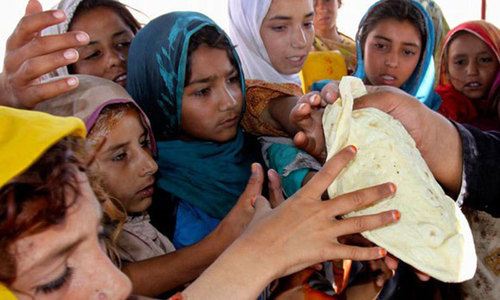
With 37.26 million malnourished citizens, Pakistan’s National Food Security Policy 2018 aims at promoting sustainable food production systems by an average growth rate of four per cent with goals of improving food availability, accessibility and sustainability.
The key goals of the policy are to make agriculture more productive, competitive and climate friendly along with diversifying the food systems for nutritious diets.
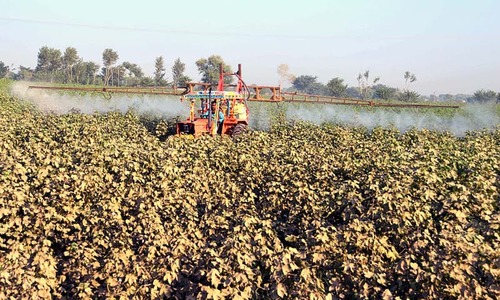
The policy intends to improve food availability by bridging yield gaps, supporting kitchen gardening and farmers with new high value crops. Similarly, better availability of agriculture inputs with qualitative seeds, pesticides along with management and reduction cost of agriculture loans.
According to the policy, despite a huge population of 72m cattle, Pakistan imports dry milk and other dairy products.
The policy aims to improve livestock production of local breeds, fodder production and quality animal feed along with investment in dairy farming and disease surveillance and control.
Published in Dawn, May 30th, 2018