WASHINGTON: They arrived at Guantanamo Bay as young men, captured in Afghanistan and elsewhere early in America’s war on terror. More than 15 years later, most of the inmates at the notorious US military prison have reached middle age.
This week, the White House seemed to acknowledge the obvious: with no plan or political will to do anything with Guantanamo’s 40 remaining inmates, some of them could be stuck there for the rest of their lives.
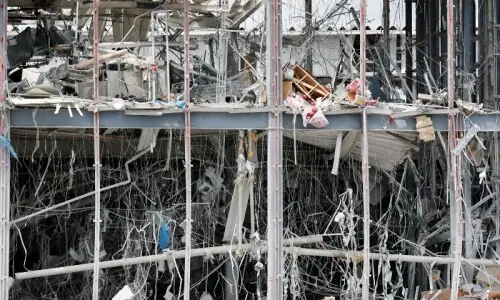
“The current facility for high-value detainees is experiencing structural and system failures that, if unaddressed, could in the future pose life and safety risks to our guard forces and the detainees being held there,” the White House said in a policy statement to lawmakers, demanding extra funds for prison reconstruction.
“It also does not meet the requirements of the aging detainee population.” The Pentagon does not release any information about Guantanamo inmates, but leaked files published by WikiLeaks and the New York Times offer some insight. On average, Guantanamo Bay’s inmates are now about 46.5 years old. The eldest, Pakistani national Saifullah Paracha, will turn 71 in August.
Neither the Pentagon nor Guantanamo Bay immediately responded to requests for comment for this report.
Perhaps the most notorious inmate — the alleged 9/11 mastermind Khalid Sheikh Mohammed — is 53.
The black moustache he sported when he was captured in 2003 has long since grown out into a voluminous grey beard that he now dyes orange.
James Connell, the attorney for Ramzi Binalshibh, who is charged as one of Mohammed’s co-conspirators, said he’d noticed some accommodations for aging prisoners.
“Some of attorney-client visiting spaces now have wheelchair ramps,” he said, adding that he’d also spotted handles to help inmates get up from the toilet. But, he stressed, there is “a lot of need for treatment that has not been given”.
“It is important to ensure that their health requirements can be adequately met, and we are actively engaged in dialogue with the US authorities on this matter,” said Marc Kilstein, a spokesman for the International Committee of the Red Cross.
Published in Dawn, May 25th, 2018