27
27

The Indian government signed off on an emergency executive order in a cabinet meeting to introduce capital punishment for child rapists, NDTV reported on Saturday.
The ordinance, proposed by the Indian Home Ministry, was signed by Indian Prime Minister Narendra Modi at a Union Cabinet meeting held hours after he returned from a five-day international tour.
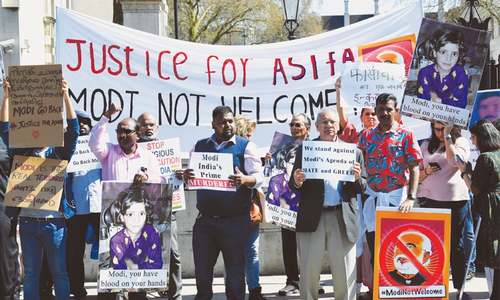
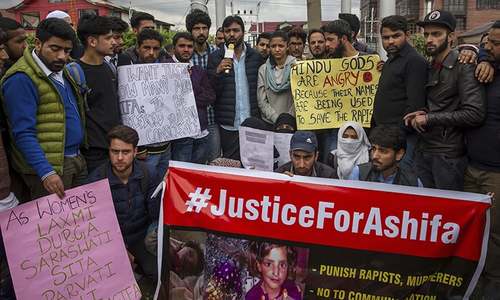
The move comes in the wake of massive outcry over the government's inaction against the rising number of rape cases, the most recent of which receiving international condemnation, was the gang rape and murder of an eight-year-old girl in Kathua city of Indian-held Kashmir.
According to NDTV, the government also signed an order allowing the assets of economic offenders fleeing the country to be confiscated.
India's Union Minister for Women and Child Development Maneka Gandhi had last week called for a change in the law, which had also seen many attempts made in the past for its revision, but was always shot down with experts noting that capital punishment "may not have a deterrent effect" on rape offenders.
In a reiteration of the view, Modi's government had dismissed the proposal in January. "The death penalty is not the answer to everything," the centre's law officer had told the Supreme Court.
Also read: Why political parties in India play upon fears of Muslims
Despite the growing pressure on the government to do more to protect children, including international indignation, the ruling party (BJP) was seen as protecting the offenders instead.
According to the report by NDTV, Maneka Gandhi has urged the Indian states to revamp police response to sexual offences by formulating special teams, investing in training aimed at sensitising officers, and taking strict action against those impeding investigation.
According to existing Indian laws, the minimum punishment meted out to a minor's rapist is a seven-year jail term whereas the maximum punishment is imprisonment for the remainder of the convict's life.
It remains to be seen whether a more severe punishment would, in fact, prove to be a deterrent as statistics show that only 3 out of 10 men charged with the rape of a minor are convicted with the remaining 7 getting off scot-free.
In 2015, 5,700 Indians were charged with the rape of a minor were acquitted whereas only 2,241 were convicted.