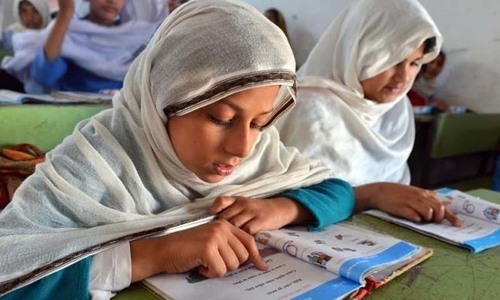
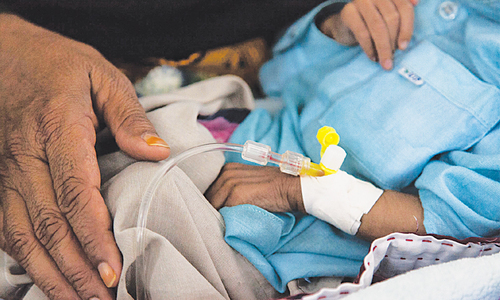
QUETTA: The Supreme Court regretted on Tuesday that health and education sectors in Balochistan were worse than those in Sindh and warned that if the situation did not improve the court would consider imposing a ban on trade unions in these departments.
“No politics is acceptable in these sectors,” said a three-judge SC bench headed by Chief Justice Mian Saqib Nisar and comprising Justice Sajjad Ali Shah and Justice Syed Mansoor Ali Shah.
The bench had taken up a suo motu case about the plight of people being deprived of basic amenities like healthcare, education and clean drinking water in Balochistan at the court’s Quetta registry.
“We thought that the situation in Sindh was very poor, but the situation in Balochistan has no match. Everybody is trying to put responsibility on others, when we ask anyone about any matter,” the court regretted.
Chief Justice Nisar expressed his annoyance over the absence of two former chief ministers of Balochistan — Dr Abdul Malik Baloch and Nawab Sanaullah Zehri — from the hearing despite the issuance of summons. He directed them to appear before the court on April 30 in Islamabad.
The court had summoned the former chief ministers to explain what they had done during their tenures to resolve numerous issues faced by people in Balochistan.
Orders transfer of health secretary to some other department
The court directed the provincial government to finalise the education policy in 15 days and also submit a compliance report in one week after admitting 100 students of Balochistan to private medical colleges.
Balochistan Chief Secretary Aurangzeb Haq, Additional Chief Secretary for Planning and Development Nasibullah Bazai, Education Secretary Noor-ul-Haq Baloch, Health Secretary Saleh Mohammad Nasar and Advocate General Rauf Atta appeared before the court.
The chief secretary assured the bench that after the provincial cabinet’s approval a draft of the education policy would be submitted to the court in Islamabad.
The chief justice lashed out at the health secretary for coming late and said he was not satisfied with the performance of Mr Nasar. “You should leave service if you cannot come on time.”
When the CJP asked the health secretary which province he was from, Mr Nasar said he belonged to Balochistan.
At this, Justice Nisar said: “If you are from Balochistan then you should work for the province. Have you seen the conditions of hospitals? There is no single MRI machine in Civil Hospital.”
The CJP directed the chief secretary to transfer the health secretary to some other department.
He regretted that the Balochistan government paid a doctor Rs24,000 per month, whereas the monthly salary of a driver of the apex court was Rs35,000.
Chief Justice Nisar directed the chief secretary to equip hospitals with modern instruments in order to provide better health facilities to people.
The education secretary informed the court that over the last three years, 400,000 children had been enrolled in schools in Balochistan.
On a court query, Mr Baloch said there were no drinking water and washroom facilities in 50 per cent primary schools in Balochistan and the situation was same in middle and high schools as well.
When the chief justice asked how much time would be required to provide such facilities in schools, the education secretary said washrooms would be constructed in 11,000 schools over the next three years. “We need Rs6 billion for providing these facilities in all schools across the province.”
The CJP said the planning and development and finance departments were part of the government and if they were not releasing funds for education then who was responsible, adding that the provincial government had failed in good governance.
Mujeebullah Ghirsheen, a representative of the Government Teachers Association, informed the court that schools were being occupied by landlords and the provincial government had failed to take action against them.
Chief Justice Nisar criticised the role of the association and reprimanded Mr Ghirsheen, asking him to educate children instead of proving himself to be a leader. Political interference in the education department would not be tolerated, he warned.
The chief justice ordered the transfer of Mr Ghirsheen to Khuzdar.
Published in Dawn, April 11th, 2018