10
10

PARIS: An uncontrolled Chinese space station weighing at least seven tonnes is set to break up as it hurtles to Earth on or around April 1, the European Space Agency has forecast.
“It will mostly burn up due to the extreme heat generated by its high-speed passage through the atmosphere,” it said in a statement.
Some debris from the Tiangong-1 — or “Heavenly Palace” — space lab will likely fall into the ocean or somewhere on land, but the chances of human injury are vanishingly small, said Stijn Lemmens, an ESA space debris expert based in Darmstadt, Germany.
“Over the past 60 years of space flight, we are nearing the mark of 6,000 uncontrolled re-entries of large objects, mostly satellites and upper (rocket) stages,” he said.
More than 90 per cent of those bits of high-tech space junk weighed 100 kilos (220 pounds) or more.
“Only one event actually produced a fragment which hit a person, and it did not result in injury.” Lemmens calculated the odds of being struck by space debris at one in 1.2 trillion — 10 million times less likely than getting hit by lightning.
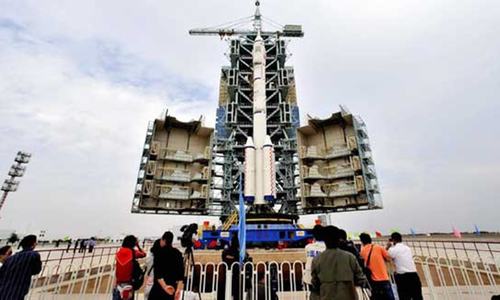
The China Manned Space programme, which put Tiangong-1 into orbit in September 2011, has been mostly mum on the fate of China’s first space station, designed to test technologies related to docking in orbit.
Daily updates on its official website have tracked its gradual descent — average altitude as of Tuesday was 207.7 kilometres — but not much else.
On Monday, China’s state-run news agency Xinhua cited the agency as saying the spacelab “should be fully burnt as it re-enters the Earth’s atmosphere.” During its operational lifetime, Tiangong took part in two crewed missions, and an unmanned one.
As with all large satellites and spacecraft, the Chinese spacelab had been slated for a “controlled re-entry” that would have seen it fall somewhere in the Pacific Ocean, far from human habitation.
In March 2016, however, the space station ceased functioning.
With ground teams no longer able to ignite its engines, Tiangong is “expected to make an ‘uncontrolled re-entry’,” the ESA said.
Published in Dawn, March 28th, 2018