



 0
0

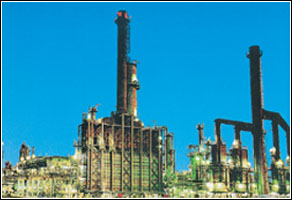 EVERY government, which came to power in this country since its birth has blessed this nation with a new industrial policy. And at times we have had a new industrial policy every year. The Planning Commission Library must be full of such policy documents gathering dust. Most are pieces of dreams, many, an exercise in playing to the galleries and a lot of them have indulged in re-inventing the wheel.
On only hopes that the new Industrial Policy which the present government is expected to announce during the current budget season does sell only dreams. Painting a rosy picture of the projected achievements and indulging in the exercise of cut and paste has never made an industrial policy come true to its objectives. And an industrial policy, which has not taken into consideration the emerging realities in the region and the world would collapse even before it gets ready to taxi.
Economically, politically and socially we are walking the same street today that we have already walked is the 1980s. Robust growth rates, and rich donors lined up with generous doles. But some new shops have also opened up on the side walks in the meanwhile.
There is the WTO. The SAARC has been activated. SAFTA is about to become a reality. The regional peace process is on the verge of opening the economic doors between India and Pakistan. Afghanistan is in the process of turning into a lucrative market. And Iran is all but ready to become a major trading partner through the projected gas pipeline.
Information Technology: Not only this information technology has actually turned the globe into a tiny village. And above all, with international economy influencing global relations rather than international politics, Pakistan’s strategic placement on the world map is likely to attain for the country, in due course of time, an important locational advantage of commercial significance.
All these factors are likely to influence our economic policies. And these, economic policies would shape our short and long term industrial policies. Today with just a click of a computer key, we can have all the information needed and the data required for reaching a policy decision or for making a commercial commitment. It is on the basis of these very data that people and countries are making and losing millions by buying long and selling short precious commodities. So, we have the ability today to minimize the damage to the economy, which in the past used to he affected by a sudden reversal of terms of trade.
Banking Sector: The banking sector the world over has taken maximum advantage from this revolution in the information technology. And it is making hugs profits. In Pakistan too, with the privatization of banks and the reforms that this sector had undergone during the last several years, the use of information technology is increasing. However, so far most of the activities of our so-call reformed banks are confined to consumer banking which has boosted the sales of cars, white goods and cell phones and which, in turn ,has helped tie industrial units producing these goods to enhance their capacity utilization and which, in turn, has to an extent added to overall economic growth rate as well as created job opportunities.
But all this has done very little to make any significant Improvement in the industrialization process. At best the banks are still sticking to their past policies of advances. They have a list of eight or ten time-tested industries and another list of about 100 odd time-tested sponsors of these industries: And all our banks take their ‘risk’ only with these industries and these sponsors. There is no tradition of venture capital in the country. The banks do not go out looking for new clientele for investment advances. This is understandable because only about a few years hack they were all in the public sector and had to follow the guidelines of the government of the day which more often that not be based on political expediencies rather than economic wisdom.
But then since the privatization, these banks have gone into the hands of financially savvy sponsors and they have appointed high quality professionals. And for such professionals, it should not take long to do away with the policies dictated by conventional wisdom and take the plunge in calculated risk taking. If the banks do not go out looking for entrepreneurs and join in the risk of diversification with their own equity investment, no industrial policy would succeed no matter how comprehensive and explicit its thrust.
Location: Pakistan is sitting right at the centre of the regional commercial hub. Goods coming from Casablanca in Africa and going to Urumchi in China and those passing through Maynmar and going to Iran and Central Asia by land would be traversing Pakistan if we reshape our economy to become in part a trans-shipment economy rather than solely as agro-based industrial economy. For taking maximum advantage of our location we need to further rationalize import duties on raw materials and intermediaries, establish warehouse-cum-fabricating facilities, good road and rail transportation system and state-of-the art seaports and airports.
Regional Economy: With the peace process between India and Pakistan gaining momentum and rail and road routes between the two the Punjabs in the north and Rajhastan and Sindh cannot be ruled out for long. And any further industrial policy should need to make room for expanding and deepening such a trade for mutual benefit.
Similarly, trade between NWFP province and Afghanistan along with export of skilled and unskilled manpower from Frontier province to the neighbouring country undergoing reconstruction and rehabilitation is likely to become a reality in due course of time. So, this new industrial policy should also have the capacity to accommodate this emerging situation. And of course a free trade area between NWFP Balochistan and Iran and Afghanistan also seems to be on the cards.
EDUCATION: The biggest hurdle in the way of rapid industrialization is the lack of emphasis on education and literacy, especially in technical fields. The lack of enough trained manpower has been one of the major discouraging factors against an accelerated inflow of foreign investment. Any industrial policy worth the name should attach the highest priority to filling this gap. Here we must do what the South Korean in the early 1960s. They lured the educated and skilled South Koreans working abroad with highly attractive incentive packages. Besides, we must go for a crash course for producing as many skilled personnel in every field as we can. Here we should make full, honest and timely use of the help that the rich countries are offering as today in the fields of education and health.
Trade not Aid: Unlike in the past decades when we were suffering a chronic shortage of resources and were facing the twin deficits of trade and budget, we are today relatively flush with cash, both in the local currency as well as in foreign exchange and have attained a level of macro- economic stability. Still, to launch an appropriate industrial policy we need much more in the shape of capital, technology and markets. It is here that we need the assistance of our new found friends in the US and Europe very much. There is no mystery behind the East Asian miracle. The US helped the post war Japan with these three ingredients to prosperity and when Japan reached a level of development it helped in a similar manner its neighbours like South Korea and Taiwan and these two in their turn helped out Thailand, Malaysia and Indonesia. Singapore and Hong Kong being city states had followed a different routes that of trans-shipment.
If the US could only encourage its private sector which is closing down its textile mills to transfer the equipment to Pakistan along with its technology and buy the produce for their markets, then Pakistan would be standing on ifs own two feet without the need of the US crutches within a matter of ten years.
Besides textile, there are other low- tech industries which both US and European entrepreneurs could shift to Pakistan, where after fabrication, they could not only buy back part of the production but also earn from exports to Pakistan’s neighbours.
Decentralization: The national urge for decentralization needs also to be kept in mind while making a new industrial policy. As it is, industry is a provincial subject, but most of its planning and implementation is still being controlled by Islamabad. The ruling party has already started talking about doing away with the concurrent list and abdicating at least 29 responsibilities to the provinces. In the environ, it would be advisable to make an industrial policy that would cater to a situation of meaningful decentralization down to the local government level.
Conclusion: Most of the past industrial policies of Pakistan have generally lacked coherence and consistency. And their objectives have rarely been spelled out. All had wanted maximization of employment, dispersal of industries, encouragement of small scale industries, promotion of “key” industries, export- led growth and efficient industrialization.
That the promotion of “key” industries, all of which, are highly capital intensive may not be consistent with the objectives of maximizing employment has not been even recognized. Similarly, industrial dispersal through low rates of import duties on inputs and capital equipment is not necessarily consistent with efficient industrialization.
Moreover, anti-export bias in trade policy runs counter to promotion of efficient and export-led growth. No policy can be effectively implemented unless policy instruments are carefully symphonized with the aim to realize the laid out goals. For example, exports cannot be promoted without removing the anti-export bias through a major rationalization of tariff and import regimes.
Pakistan’s industrialization process has been largely influenced by the trade and tariff policies which are framed with the objective of revenue generation and / or balance of payments considerations.
Policy makers have also provided fiscal incentives to promote industries, which have often given rise to new contradictions. At present, various policy measures are not consistent with the policy objectives. The industries accorded highest priorities are not afforded the maximum incentives. Similarly, the various policy measures are inconsistent; protection and fiscal incentives run counter to each other.






























