ISLAMABAD: The federal government on Monday offered the provinces to take over full responsibility of electricity and gas production, transmission and generation, with two provinces readily accepting the task.
The offer was made by Prime Minister Shahid Khaqan Abbasi while presiding over a meeting of the Council of Common Interests (CCI).
Sindh Chief Minister Murad Ali Shah and Khyber Pakhtunkhwa CM Pervez Khattak said that they were ready to take over the full chain of generation, transmission and distribution of power and gas supply at the earliest.
Informed sources said that the government of Punjab, represented by its Finance Minister Dr Aisha Ghaus Pasha, had reservations over the proposal, particularly on account of gas because of its scarcity and large consumer base. Ms Pasha said the proposal could have many implications and hence requested for some time for consultations at the provincial level.
Meanwhile, Balochistan Chief Minister Mir Abdul Quddus Bizenjo did not give his view point on the subject.
The prime minister directed that all provinces should submit their position papers so that these could be taken up as formal agenda items for consideration in the next meeting of the council.
An official statement confirmed that “the CCI discussed gas and electricity management by the provinces including generation, transmission and distribution”.
The offer to produce electricity and gas was made by prime minister during a CCI meeting
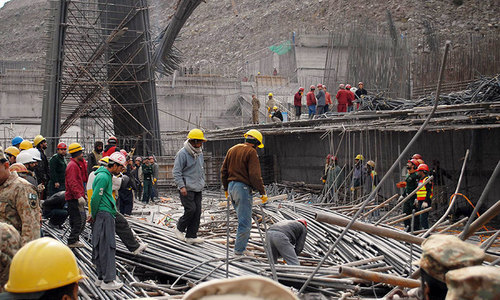
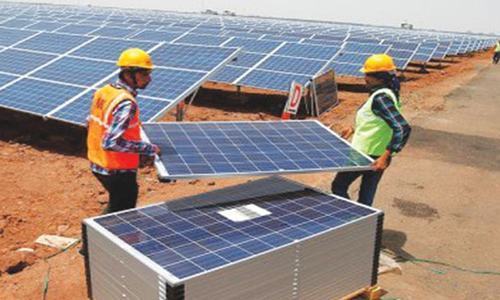
The prime minister believed the time had come for the provinces to take over responsibilities that belonged to them in the Constitution, more importantly after the expansion of electricity and gas sectors following induction of substantial quantities of imported LNG and energy related projects under the China-Pakistan Economic Corridor (CPEC), sources said.
The meeting did not formally discuss the gas sector reforms after it was reported that a previous CCI meeting had desired written comments on the subject from all the provinces and these were still awaited from a couple of provinces.
The CCI also took up the issue of finalisation of special economic zones (SEZs) under CPEC and examine how the local industry could be protected with the influx of Chinese industry and investments.
The meeting discussed proposals for duty exemption on new machinery imports from Beijing and where the old should be Chinese machinery be relocated and on what conditions. In view of the technicalities, Prime Minister’s adviser on economic affairs Miftah Ismail was directed to hold separate meetings with the provinces to finalise economic matters.
The Khyber Pakhtunkhwa government asked the centre to formally take up the finalisation of Rashakai SEZ with China instead of Hattar, which is preferred by Beijing.
It was agreed that four SEZs – namely M-3 Faisalabad in Punjab, Dhabeji in Sindh, Rashakai in KP and Bostan in Balochistan – were final from the Pakistani side.
The Board of Investment, however, insisted that the feasibility studies and documentation should be in a format acceptable to the Chinese side. For example, it was noted that a three-page document from Balochistan for an SEZ could not be considered a professional product.
It was agreed that an SEZ in Islamabad and another one on Pakistan Steel Mills land could be prepared for the second phase of SEZs implementation.
In the absence of consensus, the CCI deferred a decision on allocation of 1,200 cusec drinking water for Karachi’s K-IV water supply scheme from a common water pool.
The Sindh CM argued that part-II of the 1991 Water Apportionment Accord had specifically mentioned Karachi while discussing allocation of water for the cities to emphasise its importance for allocation of water from the joint pool.
However, Dr Pasha opposed the move, saying her province had allocated water share to Rawalpindi and would meet additional requirements of Lahore out of its own share. Therefore, there was no reason for Sindh not to meet Karachi’s drinking water requirement from the provincial share.
Federal Secretary Water Resources Shumail Ahmad Khwaja reported that water quantities were already on the decline and unless dams were built, the problem would continue to aggravate. He said the provincial canal withdrawal had dropped from 103 million acre feet (MAF) a year to 98 MAF and hence the stakeholders should think about ensuring additional water availability.
In view of the difference, the CCI directed the Water Resources Division to make a detailed presentation in the next meeting along with doable action plan.
Published in Dawn, February 27th, 2018