ISLAMABAD: Madressah registration and reform can mitigate most of their negative consequences, a report launched on Tuesday has found.
The report, titled The Role of Madrasas, was launched by the Centre for Research and Security Studies (CRSS) in collaboration with the Royal Danish Defence College (RDDC).
It suggests building trust with madressahs through financial and technical support in order to achieve oversight and monitoring, as well as overhauling the public education systems in Afghanistan and Pakistan.
The report also states that corruption and nepotism in Afghanistan’s education sector needs to be addressed.
Report suggests building trust with seminaries through technical, financial support
In order to achieve oversight and monitoring of madressahs, the trust deficit between the Afghan and Pakistani governments and madressahs has to be reduced. Seminaries should be geo-tagged and registered, and the government should streamline and facilitate the registration of madressahs by announcing requirements and nominating a body with whom they can be registered.
The report also recommends encouraging and facilitating the opening of bank accounts and annually auditing them to develop a transparent monitoring system. All curricula should be approved by the government and must include science subjects, it adds.
One of the suggestions in the report is to form a board of religious scholars with a well-defined mandate to allocate budgets for seminaries at the provincial level. Local communities should also be encouraged to submit donations and zakat to governments, for improved utilisation of resources.
The report argued that in conflict zones and areas with high sectarian tension, seminaries are bound to adopt additional security measures that are a burden on their finances. It suggests providing security to madressahs that meet the reforms requirement.
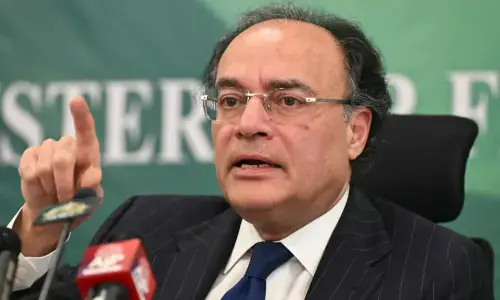
Speaking at the launch of the report, Interior Minister Ahsan Iqbal said the Pakistani government and world powers were collectively responsible for cleaning up “the mess of radicalisation”.
“We must understand the causes of militancy and radicalisation and find solutions accordingly. We need to collaborate domestically and internationally together for the cause of peace and stability in Pakistan and beyond,” he said.
National Security Advisor retired Lt Gen Nasser Khan Janjua added that there was a genuine human resource development problem.
“We have to consider the 3.5 million children in an estimated 38,000 madressahs. They are also the sons and daughters of Pakistan. We should want them back with open arms as productive members of society,” he said.
He said people working on mainstreaming madressahs had decided in principle that children studying at seminaries would study the same syllabi as children studying at convention schools, along with religious education.
CRSS representative Zeeshan Salahuddin said that 544 interviews were conducted with families that have sent their children to study at seminaries. Of the total, 41.35pc had religious reasons for doing so, while 43.15pc said they had financial reasons for sending their children to seminaries.
Gul Dad, a representative of the Pakistan Institute of Conflict and Security Studies, said that 93pc of madressah funding comes from domestic sources, while 7pc comes from foreign donors.
The bulk of the donations comes from mandatory donations such as zakat, ushr and khums, as well as animal hides. He said people donate the seminaries because they feel doing so fulfils religious obligations.
He added that donations come through donation boxes, bank deposits, sums paid directly to the principal or mohtamim of the madressah and through collections during Friday prayers.
Published in Dawn, January 31st, 2018