16
16

ISLAMABAD: The World Bank says that economic growth in Pakistan is forecast to increase to 5.5 per cent in the fiscal year 2017-18, and reach an average of 5.9 per cent over the medium term on the back of continued robust domestic consumption, rising investment and a recovery in exports.
However, the main risks to the outlook are domestic, including fiscal slippages, increasing liabilities related to infrastructure projects, slippages relating to upcoming general elections and weak tax revenues that can derail fiscal consolidation efforts, warns the Global Economic Prospects report published by the bank on Wednesday.
The report says that in Pakistan growth accelerated in fiscal year 2016-17 to 5.3 per cent, somewhat below the government’s target of 5.7 per cent, as industrial sector’s growth was slower than expected. Activity was strong in the areas of construction and services and there was a recovery in agriculture production with a return of normal monsoon rains.
In the first half of fiscal year 2017-18, the activity continued to grow, driven by robust domestic demand and supported by strong credit growth and projects related to the China-Pakistan Economic Corridor.
Meanwhile, the current account deficit widened to 4.1 per cent of GDP compared to 1.7 per cent in the previous year, amid weak exports and increasing imports.
In South Asia, economic growth slowed to an estimated 6.5 per cent in 2017, marginally below the June 2017 forecast owing to temporary disruptions from adverse weather conditions across the region. The region’s growth prospects appear robust, with household consumption expected to remain strong, exports expected to recover, and investment projected to revive with the support of policy reforms and infrastructure improvements, according to the report.
Growth in the region is expected to pick up to 6.9 per cent in 2018, and stabilise to around 7.2 per cent over the medium term, but would remain slightly below June projections due to the weaker-than-expected recovery in domestic demand.
The forecast assumes strengthening of external demand as the recovery firms up in advanced economies amid supportive global financing conditions. Monetary policy is assumed to remain accommodative as modest fiscal consolidation continues in some countries.
Corporate debt overhangs and high levels of nonperforming loans have been longstanding concerns in some countries of the region. Setbacks in efforts to resolve these domestic bottlenecks will continue to weigh on investment, and more broadly on medium-term growth prospects in the region.
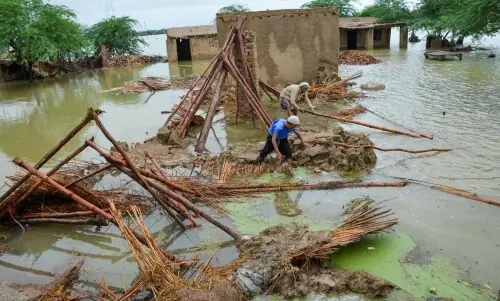
Recent adverse weather conditions have reduced agriculture output in some cases. Such developments continue to pose risks to regional growth. Recently, remittance inflows have been subdued due to fiscal consolidation and growth slowdowns in the Middle East, which constitutes roughly half of remittances to South Asia.
Outside India, fiscal consolidation slowed in 2017 as a result of revenue shortfalls and increased government spending in the Maldives and Pakistan. Current account deficits gradually widened across the region particularly in India, Bangladesh and Pakistan. In particular, non-performing loan ratios remained high, around 10 per cent, despite progress in some countries like Pakistan, Afghanistan and the Maldives, the report says.
Published in Dawn, January 11th, 2018