0
0

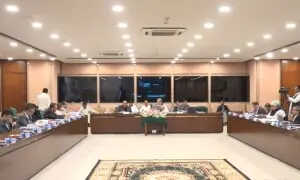
ISLAMABAD: The Senate Standing Committee on National Health Services (NHS) on Tuesday directed the Federal Board of Revenue (FBR) to carry out a three-year audit of tobacco companies to determine whether they are involved in tax evasion.
The direction was issued after the committee was briefed by the Ministry of NHS that the number of smokers in Pakistan had reached 25 million. Moreover, every year 180,000 people died because of tobacco-related diseases.
An official of the ministry suggested that the FBR should introduce a tracking and tracing system for tobacco companies to stop tax evasion.
He also said the introduction of the third slab of taxes by the FBR on cigarettes had decreased the prices of tobacco. Because of the decision, he added, the prices of four brands decreased by 80pc, pushing up their consumption.
FBR should introduce tracking, tracing system for tobacco companies, NHS ministry suggests
“The smuggling of non-customs paid cigarettes should have been stopped but it is unfortunate that the prices were decreased to curb the smuggling. Currently, 1,200 children start smoking every day,” he said.
Senator Ateeq Sheikh said two multinational companies used their contacts to decrease the prices of tobacco-related products.
The committee, chaired by Senator Sajjad Hussain Turi, recommended that there should be high taxation on cigarettes so that their use could be discouraged. The committee observed that the illicit use of cigarettes was an enforcement issue but taxation was a policy issue and the FBR should come up with proposals to tackle it.
Medical colleges’ fee issue
The committee was told that the fee structure of private medical colleges would remain unchanged until the Pakistan Medical and Dental Council (PMDC) finalised an independent audit of their incomes and expenditures.
In September 2017, after a number of meetings with the private medical and dental institutions, the council increased the fee from Rs642,000 to Rs800,000 and decided that it would be revised every year according to the inflation rate.
However, it was also decided that there would be a centralised induction policy for students and colleges would not be allowed to take aptitude tests.
The colleges will be fined Rs20 million if they received donations from students and their annual intake of students would also be reduced by 10 students as a penalty.
However, the decision was withdrawn last month because colleges increased the fee but did not provide basic facilities to the students.
The PMDC also directed the colleges to submit affidavits from each student stating that they did not give any donation. But the colleges did not submit the affidavits. On the other hand, the council continued receiving complaints that the colleges were taking donations from the students.
Published in Dawn, December 6th, 2017