Frantz Fanon enjoys a special place in the minds and hearts of thinkers and activists belonging to the developing world, non-white races, oppressed nations and struggling classes. Fanon’s works have helped us better understand and critique both colonialism and capitalism. In The Wretched of the Earth, he writes: “For a colonised people the most essential value, because the most concrete, is first and foremost the land: the land which will bring them bread and, above all, dignity.” Fanon’s words came back to me when it was announced last week that Muhammad Ibrahim Joyo had passed away. Joyo was committed to his land, language, people and culture, and lived for 102 years with great dignity. His dignity was drawn from the land he loved. He inspired generations of writers, academics, political workers and social reformers in Sindh and beyond through his writings and translations, analytical discourses and enlightened conversations.
It was courtesy my friend Zaffar Junejo — who recently published an award-winning Sindhi novel Ujjamio Barran — that I first met Joyo in Hyderabad more than 20 years ago. Even then Joyo was an octogenarian who had lived an eventful public life. But his passion for history, politics, philosophy and literature kept him enthusiastic and involved until the very end. He was a dedicated Sindhi nationalist who did not simply lament about the sorrows of Sindh and the trials and tribulations of the common folk at the hands of the powerful; he applied his intellectual prowess and organisational skills for the betterment of those he stood for. His contribution, spanning no less than 80 years towards uplifting Sindhi society and liberating the Sindhi mind, remains unparalleled.
In our first longish meeting held over many rounds of tea and freshly baked biscuits, the conversation revolved around Paulo Freire’s Pedagogy of the Oppressed, which Joyo had translated into Sindhi under the title of Ilm-i-Tadrees Mazlooman Je Laey. This small but significant work is a Marxist analysis of traditional education provided in schools. Freire called it ‘official knowledge’ — a tool to persist in the oppression and domination of the weaker nations and working classes. Joyo explained to me how solidarity, cooperation, organisation and cultural action were the essential requisites to transform the thinking of peoples and nations living under colonial, feudal, capitalistic and cultural oppression. Joyo was a living example of what he preached and professed. He not only enriched people and brought them together through his original writings and translations — from Plutarch to Jean-Jacques Rosseau in philosophy and from Anton Chekhov to Bertolt Brecht in literature — but also diligently worked for the Sindhi Adabi Board besides a few other organisations for a good part of his life.
Joyo comes from that particular breed of South Asian scholar-activists who blended theosophy, mysticism, socialism and humanism with such ease that the apparent and striking contradictions between the ideologies of Karl Marx on the one hand and M.K. Gandhi on the other, begin to fade. I am always intrigued by these people — as motley and diverse as Maulana Hasrat Mohani and Khan Abdul Ghaffar Khan — who could create their own narrative out of the different knowledge bases made available to them. Syed Mazhar Jamil, the leading Urdu poet and writer who also specialises in the literary history of Sindh, sees Joyo as a Sindhi nationalist who believed in a non-violent, educated discourse on the subject. He was neither prejudiced nor lopsided. He saw all nations and nationalities as equal with a right to being sovereign. He was among those pioneering thinkers of Pakistan who saw social democracy and constitutional federalism in their true spirit as the only ways to save this country and serve its people.
Joyo also wrote for children — something that very few of our major scholars would do. It reflects on his humility and his wish to engage with people of all ages. With Joyo’s death, Sindh has been orphaned.
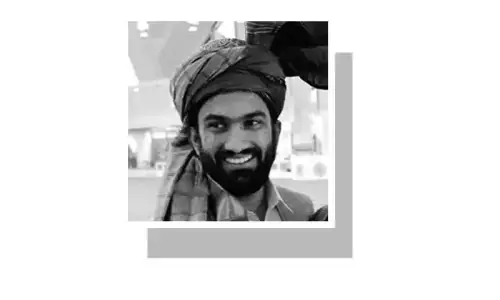
The writer is a poet and essayist based in Islamabad
Published in Dawn, Books & Authors, November 19th, 2017