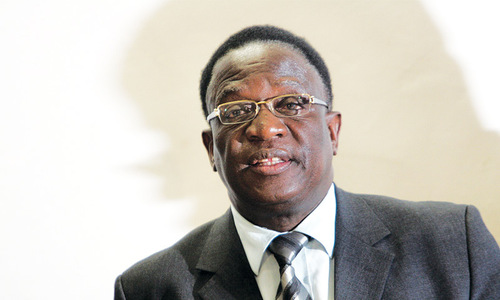
HARARE: Emmerson Mnangagwa appears well placed to return to a leading role in Zimbabwe following the army’s takeover in response to President Robert Mugabe’s sacking of the former vice president.
Nicknamed “Ngwena” (The Crocodile) because of his fearsome power and ruthlessness, the 75-year-old has a reputation for taking no prisoners.
He appeared to have been outfoxed by Grace Mugabe, who is 41 years younger than her husband, after she apparently convinced the veteran head of state to ditch his long-serving minister.
But following the army’s dramatic seizure of power and reports that Mnanagagwa has left South Africa where he has been since his dismissal, he could be preparing to return to Zimbabwe and assume a leadership role.
Under Zimbabwe’s constitution, the first vice president would automatically become acting president for 90 days.
In the early days after independence from Britain in 1980, Mugabe made Mnangagwa, who was then a young trainee lawyer, minister for national security.
Since then Mnangagwa occupied a host of cabinet positions — but relations between him and his political mentor have not always been cosy, and the younger man is no stranger to presidential purges.
Following his removal last week, Mnangagwa issued a searing five-page condemnation of Grace’s ambition and Mugabe’s leadership style.
In 2004 he lost his post as the secretary for administration in the ruling ZANU-PF party after being accused of openly angling for the post of vice president.
Four years in the political wilderness followed, during which his then rival Joice Mujuru became vice president and the favourite to succeed Mugabe.
She was ultimately deposed following a campaign orchestrated by Grace Mugabe who convinced the president she was not to be trusted.
The 2008 elections, when he was made Mugabe’s chief election agent, changed Mnangagwa’s fortunes.
Mugabe lost the first round, but his supporters were not going to make the same mistake in the second round, which was marred by violence, intimidation and allegations of vote rigging.
In the same year Mnangagwa took over as the head of a committee of security chiefs which has been accused by rights groups of organising violent campaigns to crush dissent.
He was targeted by EU and US sanctions imposed on Mugabe and his close allies over the elections and violence, but promptly given control of the powerful defence ministry.
It was a return to the home that made him a force in Zimbabwean politics in the first place.
Published in Dawn, November 16th, 2017