IS loses last towns in face of twin Syria, Iraq assaults


DEIR EZZOR: The militant Islamic State (IS) group on Friday lost control of the last two major towns under its grip in Syria and Iraq, as Syrian troops and Iraqi security forces advanced in the Euphrates Valley border region.
The simultaneous assaults on Deir Ezzor in eastern Syria and Al-Qaim in western Iraq dealt fresh blows to IS in its former heartland, leaving Albu Kamal, on the Syrian side of the border, the last town of note under its control.
The militant group that once laid claim to a self-styled “caliphate” spanning swathes of
Syria and Iraq has seen its proto-state crumble in recent months under the pressure of multiple offensives.
In October, it lost its one-time de facto Syrian capital Raqa after an assault of more than four months waged by the US-backed Syrian Democratic Forces (SDF), a Kurdish-Arab alliance.
On Friday, Syria’s army announced that its Russian-backed assault had recaptured all of Deir Ezzor city, in the oil-rich east of the country, while Iraqi forces captured the Husaybah border post and the nearby town of Al-Qaim.
“The army forces... restored security and stability to all of Deir Ezzor city,” a spokesman for the Syrian army command said in a statement broadcast live on state television.
“Deir Ezzor represents the final phase in the complete elimination of Daesh,” the statement added, using the Arabic acronym for the group.
The city “was the headquarters of the organisation’s leadership, and in losing it, they lose their capacity to direct terrorist operations”, it added.
State television said engineering units from the army were combing captured neighbourhoods to clear mines and other explosives.
Syrian forces entered Deir Ezzor city in September, breaking an IS siege of nearly three years on government-held parts of the provincial capital.
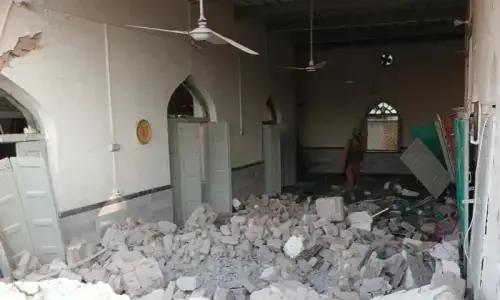
The battle has been ferocious, with heavy Russian air strikes and Syrian artillery fire leaving much of the city in ruins.
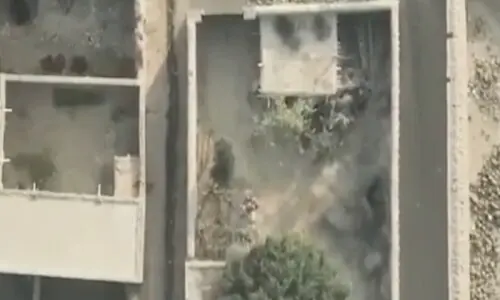
A reporter contributing to AFP inside the city on Thursday saw entire floors of buildings that had crashed onto those beneath, while on others, facades were completely blown away to reveal empty, destroyed interiors.
Trenches dug by IS fighters were still visible, as were army minesweepers working to locate and defuse explosives laid by the militants.
Before Syria’s war began in March 2011 with anti-government protests, around 300,000 people lived in the city, the capital of Deir Ezzor province along Syria’s eastern border with Iraq.
But in 2014, IS militants seized the city and much of the surrounding province, including vital oil and gas fields that once served as a key source of revenue for the extremists.
IS has now been driven from most of its strongholds in Deir Ezzor, but it still controls more than 35 percent of the province, much of it empty desert.
Its last major position is the town of Albu Kamal, though it also holds a string of smaller towns and villages and at least one oilfield, according to the Syrian Observatory for Human Rights monitor. At its peak, IS controlled territory roughly the size of Britain.
Published in Dawn, November 4th, 2017