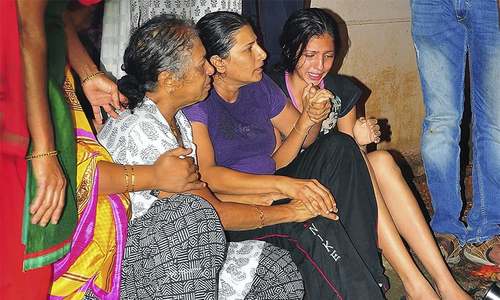
Citizens mourning the murder of Daphne Caruana Galizia are calling for Malta's deeply-ingrained tribal politics to be put aside so the shaken island nation can begin healing its wounds.
The initial shock at Monday's car bomb assassination is now turning into demands for a united front ─ with tens of thousands, party allegiance aside, expected at a national rally on Sunday demanding justice for the journalist.
Caruana Galizia's anti-corruption blog shone a light into the murky corners of Maltese politics, rattling the Labour government ─ and, more recently, their sworn enemies in the Nationalist opposition.
On Saturday, the government offered an award of 1 million euros for information leading to the arrest of those responsible, saying it was “fully committed to solving the murder” and to “bringing those responsible to justice”.
“As we are seeing protests develop, we become aware of what has been fought for in terms of maintaining democracy,” said Geraldine Spiteri, one of many paying her respects to Caruana Galizia at a growing tribute of flowers, candles and messages in Malta's capital Valletta.
“People in Malta politicise every issue,” the lawyer said, citing the “deep-rooted tribal mentality, which is very worrying”.
“But certain things go beyond that. I am encouraging people to attend on Sunday to show the powers that be, on both sides, that people are concerned.”
Maltese politics is split between Prime Minister Joseph Muscat's centre-left Labour Party, and the centre-right Nationalists.
Family party loyalty is strong. Come election time, families can expect personal visits to ensure turnout. With votes pretty much secure, partisan point-scoring can take priority over upholding the tiny Mediterranean islands' democratic institutions.
Caruana Galizia's grisly assassination has added further fuel to the politicians' tribalist bickering.
'Crocodile tears'
Carmelo Pace, a retired factory worker, was a self-confessed “avid” reader of Caruana Galizia's blog.
“I don't support the government, I support the opposition, but they are just pointing fingers at each other,” the 74-year-old said, adding that politicians lamenting her loss were shedding “crocodile tears”.
Caruana Galizia, 53, made searing allegations of financial corruption against Muscat's inner circle, largely based on the Panama Papers leak, forcing him to call a snap election in June ─ which he won comfortably.
She had recently turned her spotlight on Adrian Delia, the new leader of the Nationalist Party, which hitherto had sought to capitalise on her allegations.
Kurt Sansone, online editor of the Malta Today newspaper, said that following her murder, the country's long-running political divisions now had to be addressed.
“The polarisation does not help because our institutions need to be beefed up. This is not a situation that started a few years ago,” he told AFP.
“The hope is now that the police and the magistrate can get to the bottom of this. The country needs closure in order for us to move forward.”
Newspapers in the European Union's smallest state are running a common front page on Sunday, under the slogan “the pen conquers fear”.
Hours after they hit the newsstands, the community-organised national demonstration for justice will march through Valletta's historic streets.
Young generation unsure
“People need to go. It's important. If no-one goes, nothing will change,” said Marie, 22, a teaching student.
“Something is definitely wrong in Malta. If people our age do nothing, that means the future will be the same. Let's try and think positive.”
At the impromptu memorial to Caruana Galizia, sun-seeking cruise ship tourists photograph the flowers.
Older Maltese sit on the shady benches and debate the aftermath, while younger residents do likewise on their smartphones.
An air of fatalism has swept around online forums where young people have been discussing the murder, leaving the next generation unsure about where Malta goes from here ─ a duty, in a country of only 430,000 people, that will inevitably fall into their hands.
“Unfortunately, especially on social media, a lot of people are saying that this is the end of democracy and freedom of speech,” said Robert Napier, president of the University of Malta students' council, who has been trying to bolster undergraduates' morale and resolve.
“No matter how far people are willing to go, nothing should silence our students, who are ultimately the leaders of tomorrow."