0
0
ISLAMABAD: Senator Mushahid Hussain Sayed, who is head of the parliamentary committee on the China-Pakistan Economic Corridor (CPEC), has submitted an adjournment motion in the Senate Secretariat seeking the government’s point of view on what he called the emerging Indo-American nexus against the economic corridor.
In the motion the senator has termed the recent statement of US Defence Secretary Gen James Mattis that the corridor is passing through disputed territory a clear “U-turn in Pak-US policy”.
According to the senator, the motion is submitted so that the house could immediately discuss the US defence secretary’s statement in which he has opposed the ‘One Belt One Road’ (OBOR) initiative of China and claimed that the CPEC, which is the flagship and pilot project of the OBOR, is passing through a disputed territory.
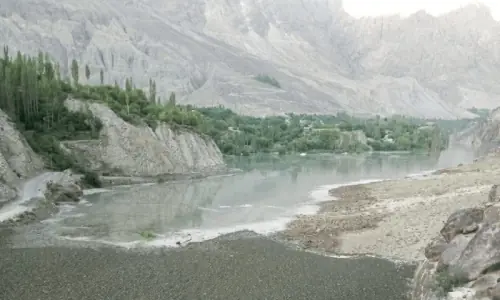
The $56 billion CPEC passes through Pakistan’s northern areas, which India claims is part of the disputed Jammu and Kashmir territory.
Defence Secretary Mattis told the US Senate Armed Services Committee recently that: “The One Belt, One Road also goes through disputed territory.”
Senator Sayed said in the motion that: “Since this is the new pressure on Pakistan by the US and ‘U-turn’ in Pak-US relations, the government through the Foreign Office should explain emerging Indo-American nexus.”
He questioned what step Pakistan was contemplating to counter these moves detrimental to the national interest.
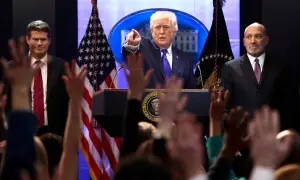
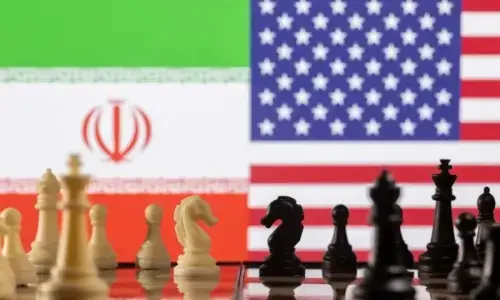
It is believed that the new US position on CPEC will further strain its already tense relations with Pakistan which also opposes the greater role Washington has assigned to India in Afghanistan in a strategy President Trump announced on Aug 21.
A recent statement of Prime Minister Shahid Khaqan Abbasi is also evident of the fact that US-Pakistan relations are tense these days as he has said that the days of Pakistan’s dependence on the US to meet its military requirements have ended.
He has said that the new US policy to include India for peace-building in Afghanistan will be detrimental to the region. “We don’t believe that injecting India into the Pakistan-US relationship will help resolve anything, especially in Afghanistan, where we don’t see any role for India. India has a relationship with the US, and that is between them and the US,” Mr Abbasi added.
Published in Dawn, October 11th, 2017