1
1

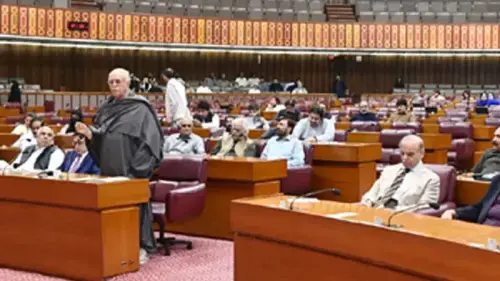
BAGHDAD: Iraq’s parliament’s on Tuesday voted against plans by Kurdish leaders to hold an independence referendum just two weeks before it was to be held, echoing regional criticism of the poll.
The non-binding referendum planned for Sept 25 has faced strong opposition from Iran and Turkey, which fear it will stoke separatist aspirations among their own sizeable Kurdish minorities.
Critics of the vote, including the US and the EU and even members of the 5.5 million-strong Iraqi Kurdish population, say it could distract from the fight against jihadists.
Iraqi and Kurdish peshmerga forces have played a key role in battling the IS which captured swathes of the country in 2014, and the fight has borne fruit in recent months.
The vote — which prompted a walkout by Kurdish lawmakers — came as the Kurdish parliament said it would meet on Thursday, for the first time in two years, to vote on the referendum.
The referendum could lead to the independence of Iraqi Kurdistan, an oil-rich region in the country’s rugged, mountainous north which gained de facto autonomy in 1991.
However, the region, whose people were brutally repressed under former dictator Saddam Hussein, won autonomy in 2005 under a constitution which set up a federal republic in Iraq.
Prime Minister Haider al-Abadi and other top officials have said repeatedly the referendum would violate Iraq’s constitution.
Kurdish leaders have said a “yes” vote would pave the way for the start of “serious negotiations” with the Baghdad government.
Iraqi Kurdistan is made up of three provinces that are run by an autonomous regional government and protected by their own security services.
The concept of an independent state is seen as a dream come true for a broad spectrum of Iraqi Kurds, but some in the community fear the referendum could undermine plans to pursue the battle against IS.
After driving IS from second city Mosul and Tal Afar, Iraqi forces are readying to retake Hawija, one of the jihadists’ last urban bastions in the country.
The town lies on a major fault line of Arab-Kurdish tensions because it is located in oil-rich Kirkuk — a province contested by the Baghdad government and the autonomous Kurdish region and home to diverse communities, including Arabs and Turkmen.
Authorities in Kirkuk have, against the advice of the central government in Baghdad, decided they will take part in the referendum, in what could further stoke tensions.
Political scientist Abdelhakim Khasro said there are no constitutional or legal “obstacles” to stop the Kurds from holding a referendum. “The only obstacle serves the interest of regional countries and aims at weakening Kurdistan,” he said.
Published in Dawn, September 13th, 2017