Indian Prime Minister Narendra Modi and his Japanese counterpart Shinzo Abe will break ground on India's first bullet train project on Thursday in western Gujarat state, as the country seeks faster travel for millions.
Modi has pledged to invest billions of dollars to modernise India's creaking railway system, with the bullet train one of his key election promises ahead of his landslide victory in 2014.
The leaders will lay the foundation stone of the high-speed rail network between Ahmedabad and India's financial hub of Mumbai on September 14, a statement by the Gujarat government said Saturday.
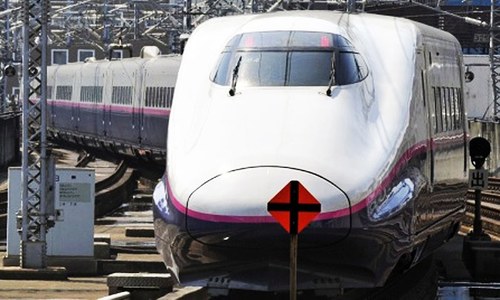
Japan is a pioneer in high-speed rail networks, and its Shinkansen bullet train is among the fastest in the world.
Japan will provide 85 percent of the total project cost of $19 billion in soft loans.
The train will reduce the travel time between the two cities from eight to three-3.5 hours, and is expected to complete by December 2023. It will have a capacity of 750 passengers.
India's traditional railway network is the world's fourth largest by distance and remains the vast country's main form of travel, with 22 million passengers commuting daily.
But passengers have to often endure chronic delays in journeys on the British-era network, where only a few trains hit 100 miles per hour, and which has been hit by series of deadly crashes in past years.
Modi recently replaced his railway minister after a series of derailments, including one last month which killed at least 23 passengers in the northern Uttar Pradesh state.
In November, 146 people died in a similar disaster in Uttar Pradesh.
Abe's two-day visit to Ahmedabad comes ahead of Modi's 67th birthday on Sunday. Modi has a history of 'birthday diplomacy' in his home state, hosting Chinese President Xi Jinping in Gujarat on his birthday in 2014.
The two leaders are expected to sign several agreements during the visit and inaugurate a Japanese industrial park in the state that already hosts Honda and Suzuki auto plants.