ISLAMABAD: A coalition of civil society organisations striving to make electoral processes more transparent on Wednesday described ‘political dynasties’ as a threat to democracy and called for legislation to curb the trend.
Speaking at a briefing on the proposed Elections Bill 2017, recently introduced in the National Assembly, Free and Fair Election Network (Fafen) chairperson Sarwar Bari asked parliament to look into the issue of political monopolies and the control of certain families over political parties.
“Stricter measures are required to make political parties more representative through term restrictions and transparent intra-party elections,” he said, also calling for restrictions on the number of blood relatives that could contest the polls.
“Similarly, indirect elections to the Senate must be replaced with direct elections, as it will restrict the ability of party leaders to induct members based on nepotism,” he noted.
Mr Bari termed the presentation of the new bill “an opportunity for parliament” to deliberate on the constitutional amendments that could help avoid post-election tensions between political parties, such as those witnessed in 2013.
The head of Fafen also called for a constitutional amendment pertaining to the appointment of the caretaker government, saying that public hearings of all potential nominees for the posts of caretaker prime minister and the four chief ministers should be made mandatory.
He also said that a constitutional amendment was required to prohibit candidates contesting on multiple seats, a practice that burdens the state exchequer when subsequent by-elections have to be held. In the general elections 2013, as many as 136 candidates contested from multiple national and provincial assembly constituencies, and as a result, 45 by-elections were held.
Mr Bari also pointed out that apart from the Hindu and Christian communities, no other religious minority was represented in the assemblies at all.
The network urged parliament to address weaknesses in the proposed Elections Bill, 2017, saying that the monopolies of a few families on political organisation should be diluted.
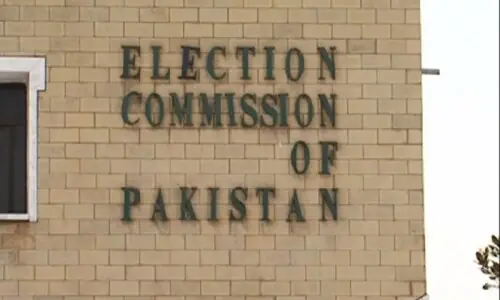
It said that critical improvements were still required in the proposed law. In particular, Fafen said, the bill does not define a procedure whereby the Election Commission of Pakistan (ECP) can penalise a public servant or any other person who is dishonest in the discharge of their duty and can only suspend such officials.
Even though the bill has empowered the ECP to initiate disciplinary action against officials appointed on election duties, it is still unclear whether officials seconded from subordinate judiciary to perform such duties will be also be covered.
In its criticism of the proposed legislation, Fafen pointed out that the bill is inconsistent when it comes to the disqualification of elected members.
Under the new law, ECP may disqualify a member of parliament for a second violation of the Code of Conduct for Political Parties and Candidates, or if the member is involved in an agreement to bar women from voting. However, it cannot disqualify a member who has submitted a false return of election expense or wealth statement.
The bill also includes certain positive measures related to women’s participation in elections, but is missing initiatives on behalf of other marginalised communities, including religious minorities, persons with disabilities, and transgender individuals.
Fafen also warned that if the bill is passed in its present condition, ECP will encounter various challenges in conducting free and fair elections, while other stakeholders, such as voters, political parties and contesting candidates, will also face various hurdles.
Published in Dawn, August 17th, 2017