Fears and self-reflection on British election day


“ARE you going back to your country? How soon?”
It’s a chilly election morning in London where I am introducing myself as a reporter for a Pakistani newspaper and asking questions as voters walk out of the Fairlight Christian Centre, one of several polling stations registered in Tooting.
Robert Merry, a middle-aged resident and unflinching supporter of the Conservative party, is clearly relieved when I tell him I am returning home in 10 days.
“To be honest, I’m not being racist,” he tells me, attempting to explain his earlier question. “But I don’t want to become a minority in my own country. The influx of Asian and continental immigrants… that’s got me really concerned.”
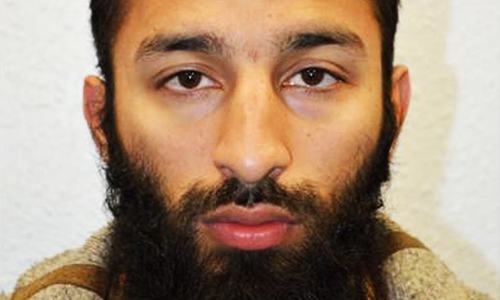
I probe a little and ask if the ethnic identities of the London Bridge attackers — Pakistani, Libyan-Moroccan, Italian-Moroccan — make him afraid of migrants. But his answer is surprising: “I can’t condone what those guys did, but I can understand it. Because if I was a Muslim growing up in Libya or Iraq and they [the UK and US] did that to my country … Dare I say, if I was a young Muslim I would probably go for jihad. Why is the UK involved in these wars that serve the interests of American oil corporations?”
Despite this unsettling conversation with Merry, as the day progresses I learn that although talks about Brexit are high in the media and the trauma of attacks in Manchester and London lingers, fears about extremism are not in the forefront of the minds of many voters when they make their decisions.
Voters’ primary concerns include cuts to tuition fees, climate change, income tax proposals and National Health Service (NHS).
“[Climate change] is the biggest threat to humanity,” says 30-year-old Patrick Ellen, who voted for the Green Party, referring to US President Donald Trump’s withdrawal from the Paris Agreement.
Rosie, a 27-year-old physiotherapy student, says she voted Conservative because she didn’t agree with Jeremy Corbyn’s income tax proposals, which would hit her parents hard.
Virendra Sharma, a Labour candidate from Southall who has been MP consecutively since 2007, says the big issues are NHS and education and not Islamophobia and anti-immigrant concerns.
Sharma, who came from India and has lived in the UK for over 50 years, said that anti-immigrant sentiments and Islamophobia are only the “sad” emotions of “small groups of undemocratic people”.
The majority of society “believes in peace” and “trusts each other” he says, as he greets voters in his constituency. “Days in which racism is a social issue in the focus are gone” and “it’s not the common practice anymore,” Sharma adds.
Members of the Pakistani community, who largely voted Labour, too appear more focused on issues of education and public health.
“Labour will help build a strong Britain,” says Sajid Hameed, a manager at a company in Tooting. “Removing tuition fees is one of the best highlights of the election. I have children and look forward to them enjoying free education when they grow up.”
Mrs Sohail, a resident of Southall, says this is her first time voting in London. “Despite the Manchester and London Bridge attacks, I don’t think London will be unwelcoming to Pakistanis. Look at me [points to her hijab]. I dress like this and people have been friendly.”
Pakistanis self-reflect
While many Pakistanis do not feel racism is a major concern, several feel other Pakistanis can do more to integrate into British society.
Mohammad Khan, a Southall resident who moved to London in the 1980s, says, “Our bodies are in London but our minds are in Pakistan. It is a closed society. It may be because we have certain values and social barriers like, for instance, we can’t go to the pub [and drink].”
Additional reporting by Jingnan Huo. This story is part of a reporting project with Dawn, the Centre for Excellence in Journalism at IBA and the Medill School at Northwestern University.
Published in Dawn, June 9th, 2017