5
5

KARACHI: A nine-member team of World Health Organisation experts on Thursday recommended to the government to take ‘radical’ measures to safeguard the city from increasing incidence of chikungunya.
The WHO team comprising epidemiologists, entomologists and observers exchanged their findings with Sindh health ministry officials after completing their three-day mission during which they visited Orangi, Korangi, Lyari, Bin Qasim and Malir — the disease-infested towns in five of the six city districts.
At a meeting following the visit, the two sides agreed on certain measures that the local health authorities should take to rein in the rapidly increasing incidence of chikungunya. The findings would be compiled within a week and duly shared with the media, the officials said.
Read more: ‘Chikungunya worsens poverty levels’
In their basic recommendations, they said, the teams called for effective and integrated vector control interventions. They highlighted the need to improve environmental conditions by removing piles of garbage and fixing sanitation problems.
Need for integrated vector control intervention, removal of garbage highlighted
As Sindh lacks a facility to diagnose chikungunya through blood test, they said there should be well-equipped laboratories with skilled human resource and a mechanism for report sharing.
Sources in the health ministry said one of the proposals was to get influential people from communities involved for better awareness about the disease; and dissemination of proper messages through the mass media for public education.
They also discussed the need for a designated media person and training of media personnel to ensure messages properly reached target populations.
Officials said health education, improved sanitation and eradication of vector was discussed in detail at the final meeting. They agreed on educating people to use nets and repellents and to never opt for self-medication.
Ibrahim Hyderi, one of the congested neighbourhoods on the fringes of the city, which has recently seen the alarming incidence of chikungunya, was decided to be focused on to control the spread of the viral disease.
The officials said fumigation in the neighbourhood was under way. “We have handed another 400 litres of pesticides and insecticides to the fumigation teams of the city’s municipalities to use them in their ongoing vector control programme,” said a senior official.
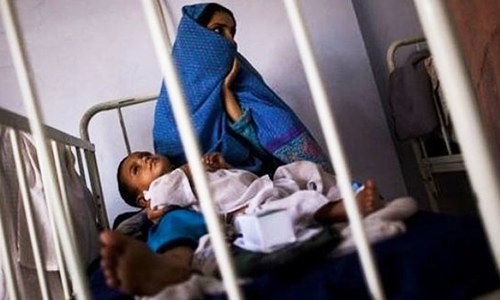
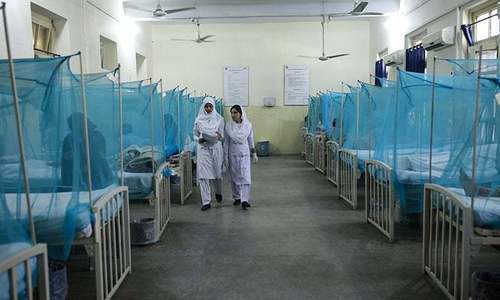
At the meeting, the sources said, the WHO representatives were critical about the lesser number of diagnostic facilities and inadequacies in treating chikungunya patients at public-sector hospitals. They also showed their surprise at the fact that a majority of doctors had little knowledge about treatment of chikungunya patients.
“Pathetic vector control programme” was another cause of concern for the WHO experts who demanded better hygienic conditions in the affected neighbourhoods to control chikungunya, said an official.
The WHO team had arrived on Tuesday with the aim to help the Sindh authorities curb the incidence of chikungunya.
Overall the authorities have got reports of some 2,076 ‘suspected’ cases of chikungunya in the city. However, they sent blood samples of 239 of them to the National Institute of Health, Islamabad, of which 183 were confirmed to have been suffering from the viral disease.
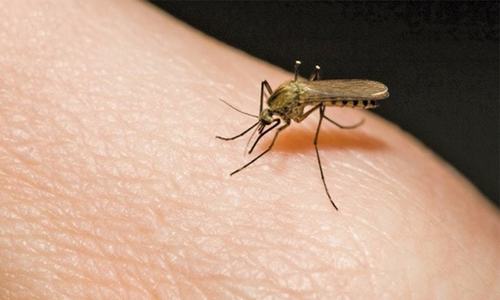
Chikungunya, which shares some clinical signs with dengue, is transmitted to humans by infected mosquitoes. It causes fever and severe joint pain. Other symptoms include headache, nausea, fatigue and rash.
Know more: Chikungunya is preventable, say health experts
Published in Dawn, May 5th, 2017