

Islamabad Literature Festival 2017 begins tomorrow


 3
3
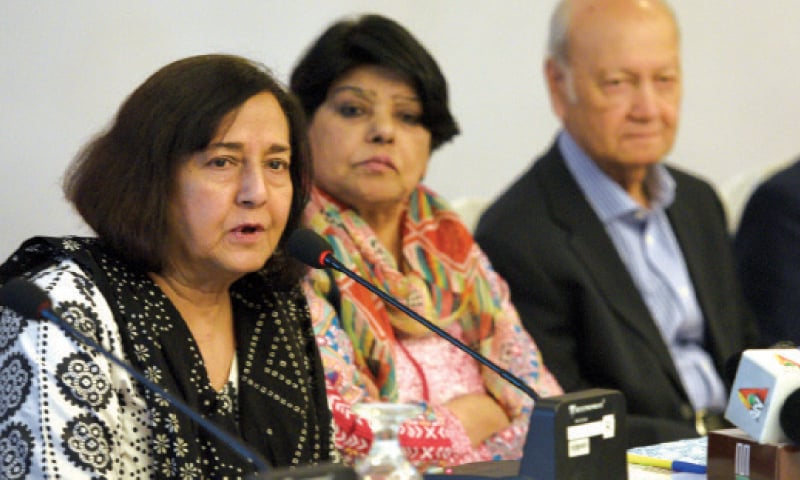

ISLAMABAD: Islamabad’s fifth literary festival, which will begin on April 14, will celebrate and analyse 70 years of literature in Pakistan.
Speaking at a press conference at the Margalla Hotel, where the festival will be held, Oxford University Press Managing Director Ameena Saiyid said the Islamabad Literature Festival (ILF) is about celebrating writers, poets, reading culture and interacting with the international community. She promised the sessions will be “interactive and interesting”.
“ILF aims to provide a forum for local and international writers and readers to interact, exchange ideas and engage in dialogue, debates and readings,” she said.
Like the previous literature festivals, this year’s festival will also include talks and interviews, panel discussions, a book fair, book launches, mushairas, dramatic readings and signings. This year’s festival will include some new sessions as well as English mushairas, dance performances and sessions conducted in Pashtu and Punjabi.
The dramatic readings will include a presentation of Allama Iqbal’s Shikwa Jawab-i-Shikwa, where the shikwa will be read out and the jawab-i-shikwa will be sung and the highlights include a one-person mushaira, where the performer will read out poems in the voice of their authors.
The festival will include 50 sessions and seven book launches, and literature in English, Urdu, Hindi, French, German, Punjabi and Pashtu will be featured. Some 150 speakers will be taking part in the festival, 141 of which are Pakistani and nine who will be coming from other countries.
These include Senate Chairman Mian Raza Rabbani, Aitzaz Ahsan, Anwar Maqsood, I.A. Rehman, Kishwar Naheed, Nafisa Shah and Sherry Rehman.
Amardeep Singh and A.G. Noorani from India, David Waterman from France, Elisa Jori from Italy and Charles Kennedy from the US are some of the international writers who will be attending the three-day event and speaking at the sessions.
Asked why the venue for the literature festival was moved to a hotel again after holding it in Lok Virsa last year, Ms Saiyid said the last venue was confusing for some of the visitors. Some could not find the rooms that the sessions were to be held in and others had found the long walks between the various halls laborious.
Renowned poet Kishwar Naheed said this was a celebration of the literature produced in the 70 years since partition and to tell the younger generation what was and what was not included in the history recorded since.
“The separation of Bangladesh from Pakistan is dealt with in one line in most books. We do not have many things about the partition of India as well in the books. For instance, women and children sent money orders to the Quaid-i-Azam when he called for funds and women would send flour to the offices of the Muslim League so they could sell it and fund their campaign,” she said.
She said our books do not make clear what sort of culture should and is being promoted in literature and that the media is also confused about what to write and what to portray, all of which will be discussed in the festival.
She urged Ms Saiyid to hold just one session on August 14 dedicated to discussing these questions.
Former defence production secretary retired Lt Gen Talat Masood said there has been an increase in the number of people attending the ILF over the years which shows an increase in reading culture, which in turn will lead to the development of the country.
According to a handout given at the press conference, 15,000 people attended the 2013 ILF, 10,000 had come to the one held in 2014, 30,000 attended in 2015 and 60,000 visitors came to last years’ festival.
Published in Dawn, April 13th, 2017




























