16
16

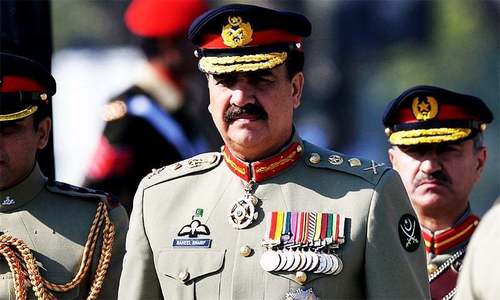
Lashing out at critics of retired Gen Raheel Sharif's appointment as head of the multinational Saudi military alliance, Sindh Governor Muhammad Zubair defended the move, terming it Sharif's 'prerogative' as a 'normal person'.
Speaking to journalists on the sidelines of the 'Leaders in Islamabad' summit in the federal capital, Zubair said: "His [Sharif's] job as chief of the Saudi-led alliance is also being seen as something extra-ordinary – when it should be his prerogative as a normal person.
"He is a normal general like other generals and it’s his right to acquire the piece of land he was given ... Let’s be fair with him — let’s not make him larger than life. That will only create more problems for him," he cautioned.
The appointment of Sharif as the leader of the Saudi military alliance has sparked debate over how the move will impact Pakistan's foreign policy, and whether it was fully sanctioned by parliament.
PML-N responsible for 'fixing' Karachi
Zubair went on to say that "100 per cent of the credit for Karachi’s operation goes to Prime Minister Nawaz Sharif."
Recalling that although "all stakeholders had been existing for years," Zubair claimed that the catalyst that made the Karachi operation possible "was Nawaz Sharif coming into office in June 2013. That was the difference."
The governor believed that "until the tougher political compromises were made by the premier, peace seemed unattainable".
Zubair also cited the government's crackdown on Muttahida Qaumi Movement (MQM) founder Altaf Hussain as an example of its tough stance on crime in Karachi.
"[Interior Minister] Chaudhry Nisar took out a red warrant against Altaf Hussain. He initiated the Imran Farooq murder trial in Pakistan. In addition, one of Nisar’s main propositions to the UK authorities has been asking them to cooperate with Pakistan on cases against Altaf Hussain," Zubair said.
"Altaf Hussain is now part of history, as far as Pakistan is concerned," replied the governor, to a question about policing the MQM.
"Farooq Sattar, Mustafa Kamal; they have all distanced themselves from Altaf Hussain. That is a major change," he noted.
"The only two examples we have of successful operations are the recent Karachi operation and the nation-wide Zarb-i-Azb," he continued.
Zubair assured reporters that the PML-N would keep working on bringing peace to Karachi "until criminality has been totally uprooted from the city".
When questioned about the awaited Panamagate verdict, Zubair observed "the longer we wait, the poorer it will be for our economy".
"The anticipation over Panamagate verdict has had an adverse impact on our stock market. It’s not just the stock market; even foreign investors have put their investment plans on hold due to the impending verdict. So the sooner we hear the verdict, the better it will be for our country."