16
16
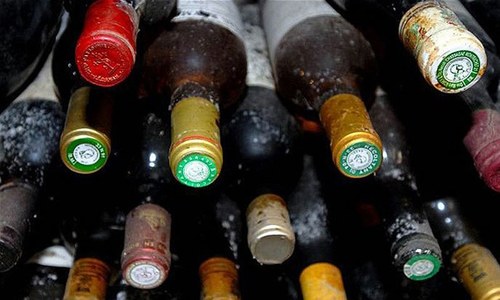
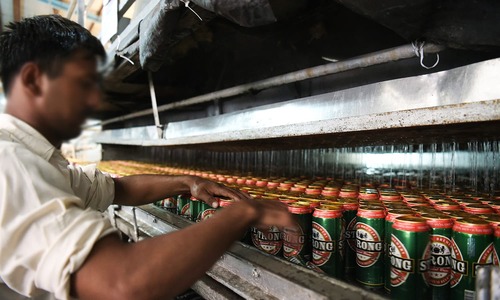
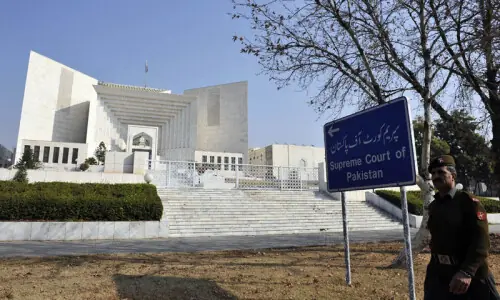
The Supreme Court on Monday suspended a Sindh High Court (SHC) decision to seal 120 liquor shops in operating in Sindh.
Admitting a petition filed by the owners of liquor stores, a two-member Supreme Court bench comprising Justice Ijaz Afzal and Justice Mazhar Alam ruled that the SHC cannot issue such an order when a law governing the sale of liquor across the country already exists.
Lawyer Shahid Hamid, representing various wine shop owners from Sindh, had challenged the SHC order, saying liquor shops operating in Sindh were licensed and taxed by the government and should be allowed to continue operating without hindrance.
In his remarks, Justice Afzal noted that the sale of alcohol had been banned in the country in 1979.
"If someone is found violating the law [regarding the sale of liquor], the police can act against them," he said.
He also added that if someone violates the law after the court's current ruling, contempt proceedings can be initiated against them.
PML-N lawmaker Dr Ramesh Kumar Vankwani, who is patron-in-chief of the Pakistan Hindu Council, in his arguments said the Hindu religion prohibits consumption of alcohol.
Some liquor shops exist in close proximity to mosques, temples and churches, he said, while requesting the apex court to not lift the ban on liquor shops until the Sindh government files its reply in the high court regarding regulation of sale of liquor.
While setting aside the March 2 order of the SHC, the SC said it will hear the wine shop owners' petition within three weeks.
In its order, the SHC had held that 120 shops operating across the province were clearly engaged in the illegal sale of wine and liquor; ie, without ensuring that it was sold to non-Muslims alone and that too within the prescribed quota, thus violating prohibition rules and doing business contrary to the injunctions of the Hadd Order 1979.
The SHC had ordered the director general of excise and taxation to seal all the liquor shops in Sindh with immediate effect and asked the inspector general of police to ensure compliance in this regard.
The court had given the Sindh government one month to evolve a mechanism in consultation with the stakeholders to ensure that only licensed liquor shops sold wine and liquor to non-Muslims within the permissible quota as part of their religious ceremonies and maintained a record of sales which should be made available to the public.