0
0

ISLAMABAD: The impact of the China Pakistan Economic Corridor (CPEC) and the result of the United States presidential election on South Asia were discussed at a seminar held on Tuesday.
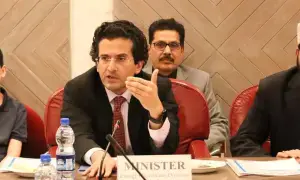
A roundtable discussion was organised by the Centre for Research and Security Studies (CRSS) and the China Institute of Contemporary International Relations (CICIR), on the subject ‘New Geopolitics and the Region’.
CICIR Director Hu Shisheng, during the discussion, said CPEC was not just a mega-project but a pilot project of China’s One Belt One Road initative. Given the massive nature of the project, he said, China and Pakistan should expect enormous challenges.
Rountable discussion held on impact of CPEC, Trump administration on South Asia
“CPEC is very important for China and it would never like it to fail, as some countries may wish so,” he said, adding that one of China’s basic goals is to help Pakistan stand on its own economically. He said pre-CPEC relations between the two countries were military-related and political in nature.
Mr Hu said China is suffering from economic overcapacity, and is compelled to export part of its industrial capacity to countries such as Pakistan - industrial zones under CPEC are supposed to play a crucial role in this respect.
He added that CPEC can be connected to Iran’s Chabahar port, as the guiding principle of China’s One Belt One Road initiative is inclusiveness, which stands in contrast to India’s approach of excluding and isolating Pakistan from regional initiatives and platforms.
CRSS consultant Arshad Abbasi noted the matter of disproportionately expensive financial conditions on CPEC projects, saying the costs of CPEC projects are much higher than the terms and conditions of similar development projects China has signed with Myanmar and other countries.
Mr Abbasi suggested a revision of the pricing mechanism for all CPEC projects by China and Pakistan.
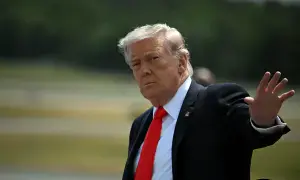
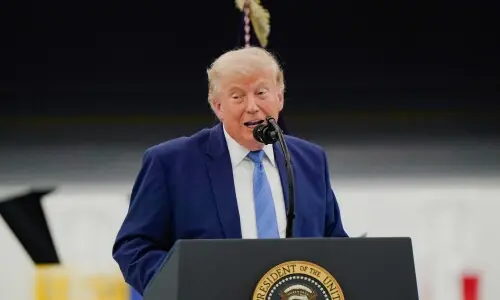
While discussing US President Donald Trump’s policies regarding South Asia, Mr Hu suggested that the administration would scale back American engagement in Afghanistan, and the consequently the responsibility to deal with the Afghan matter would fall on countries in the region, such as China and Pakistan.
Another speaker, former ambassador Mian Sanaullah, also discussed Mr Trump’s South Asia policy, saying the US president has not said much about the Afghanistan-Pakistan region, nor met any of their top leaders.
He believed that the new president may not be good for Pakistan because of his obsession with China, which could bring the US closer to India in an effort to balance and counter China.
“I personally think a tough time is coming in US-Pakistan relations,” Mr Sanaullah said.
Former ambassador Qazi Humayun said the Kabul government and the US are pressuring Pakistan to help break the stalemate between the Taliban and Kabul in favour of the latter, but this would not be possible because Pakistan knows that the government in Kabul is predominantly controlled by Tajiks, to the disadvantage of Pakhtuns, who make up the country’s ethnic majority - around 40pc.
He said a lasting solution to the Afghan problem would require proper representation of other ethnic groups in any settlement.
Former finance secretary Waqar Masood said even though Mr Trump was dismissive of Pakistan during the election campaign, his policy toward the country is not yet clear.
He said the administration would increase military spending and employ tax cuts, which would lead to a financial deficit.
Published in Dawn, March 1st, 2017