124
124

In his first address to court staff soon after he took oath as the 12th Chief Justice of the Azad Jammu and Kashmir (AJK) Supreme Court on Saturday, Justice Chaudhry Muhammad Ibrahim Zia announced that the annual increment for court employees would be conditional on the regular offering of prayers, which he said will be secretly checked.
The judge also announced that the offering of prayers would be mandatory for all employees and that there would be a designated court break for prayers.
“There shall be two groups of employees for prayers. I will lead one group, and our regular prayer leader will lead the other group,” Justice Zia continued.
In a more traditional vein, Justice Zia also encouraged government servants to discharge their duties with complete dedication, devotion, honesty, and sincerity.
"In the discharge of duties, all public servants should rise above their personal likes and dislikes, regional or ethnic prejudices, besides doing away with negligence, or dereliction of duty," he added.
AJK Prime Minister Raja Farooq Haider, Legislative Assembly Speaker Shah Ghulam Qadir, senior minister Chaudhry Tariq Farooq, outgoing chief justice Muhammad Azam Khan, Azad Jammu and Kashmir High Court Chief Justice Ghulam Mustafa Mughal, and several cabinet members, judges, lawyers and government officials attended the oath-taking ceremony.
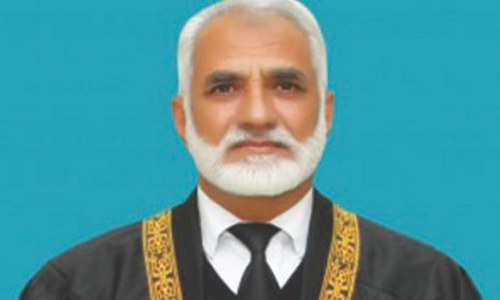
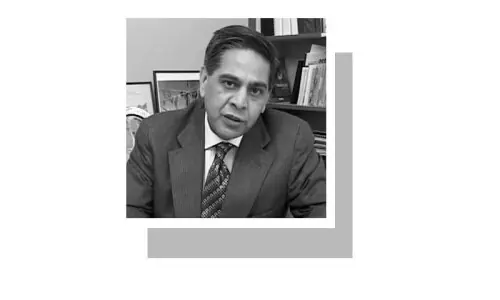
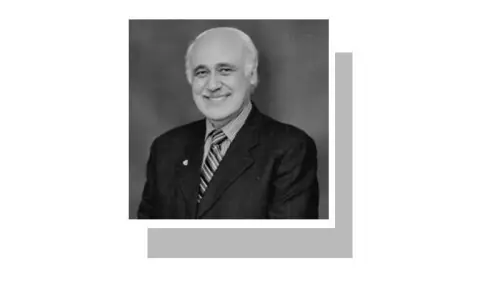
Justice Chaudhry Muhammad Ibrahim Zia
The notification regarding Justice Zia's new appointment had been issued on Feb 13.
Justice Zia was born in Kote village on the outskirts of Muzaffarabad on April 1, 1955.
After completing his LLB from the University Law College, Punjab University in 1979, he started a legal practice in Muzaffarabad.
He was enrolled as an advocate of the AJK High Court on in August 1982, and as an advocate of the AJK Supreme Court in May 1984.
He also served as president general of the Central Bar Association Muzaffarabad, as well as member and vice chairman of the AJK Bar Council.
He also served as the first chief prosecutor of the AJK Ehtesab Bureau in 2000. In December 2009, he was appointed as AJK’s Advocate General until April 2010.
On April 2, 2010, he was inducted into the AJK apex court as an ad-hoc judge, an office he held till Dec 15, 2011, a day before his appointment as a permanent judge.
Justice Zia will continue as the Chief Justice of Azad Jammu and Kashmir until 2020.
The functioning of the AJK Supreme Court
The Azad Jammu and Kashmir Supreme Court comprises three judges, including the chief justice.
Unlike elsewhere in the country, judges in the AJK Supreme Court can also be appointed directly, apart from being elevated from the AJK High Court.
Judges in AJK's superior judiciary are appointed by the AJK president on the advice of the chairman of the AJK Council, which is headed by the Prime Minister of Pakistan, and after consultation with other chief justices.