10
10

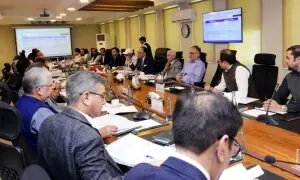
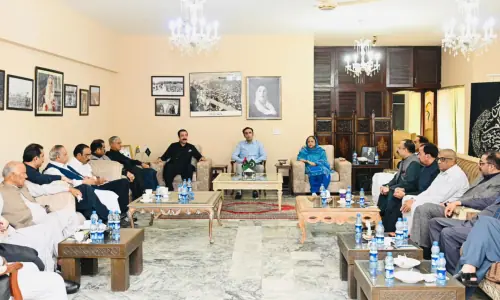
KARACHI: The National Assembly’s Standing Committee on the Textile Industry was informed on Tuesday that a large number of textile units have either shut down or relocated to regional countries due to a high cost of utilities.
Representatives of the value-added textile sector informed committee members about a number of factors that have put the country’s exports at risk.
The members expressed surprise that the K-Electric CEO failed to show up at the meeting being held at Pakistan Hosiery Manufacturers and Exporters Association (PHMA) House despite being invited.
The committee members, led by Haji Muhammed Akram Ansari, passed a resolution that asked all heads of utility companies and the secretary of the Ministry of Water and Power to attend the next meeting, which will take place within a month in Islamabad.
Speaking on the occasion, Pakistan Apparel Forum (PAF) Chairman Jawed Bilwani said the textile industry has been struggling due to a high cost of doing business. Pakistan’s textile exports in the last three years dropped 9.22 per cent to $12.4 billion. In contrast, Bangladesh’s textile exports have increased 14.5pc to $30.3bn since 2013-14. The corresponding increase in the textile exports of Vietnam was 26.1pc to $25.3bn.
The industry representatives said electricity tariffs in Pakistan stand at $0.11 per kWh as opposed to $0.09 in Bangladesh, $0.09 in India and $0.08 in Vietnam. They said Pakistan’s industrial gas tariff is 173pc, 44pc and 12pc higher than those in Bangladesh, India and Vietnam, respectively.
They said that even the minimum wage in Pakistan is 98pc, 17pc and 19pc higher than those in Bangladesh, India and Vietnam, respectively. The textile sector representatives informed the committee members about the disparities in tariffs of gas, power and water within provinces. If Punjab is paying high gas tariffs, the Karachi-based industry is also bearing a high cost of water, they said. The industrial water tariff in Karachi is 357pc and 507pc higher than those in Punjab and Balochistan.
There was a jump in exports after the announcement of the textile policy in 2009, they said. For unknown reasons, the policy was discontinued within three years, they added.
With regard to the latest relief package announced by the prime minister, the industry leaders said it may not fully produce the desired results. Some of it will be absorbed by the high cost of doing business while another portion of it will end up being shared with foreign buyers, the representatives of the textile sector told the committee members.
They said there should be no cash rebate and the government should ensure level playing field with regional countries to grow exports.
Published in Dawn January 18th, 2017