0
0

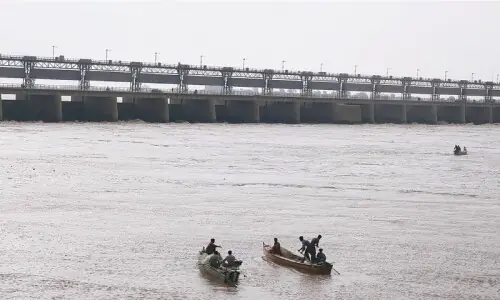
ISLAMABAD: The federal government has directed the Water and Power Development Authority (Wapda) to pay the Punjab government Rs82 billion as net hydel profit (NHP) for power generated by the 1450MW Ghazi-Barotha hydropower project (GBHP) since 2005.
This will raise consumer tariff by 33 paisa per unit countrywide, an official, speaking on condition of anonymity, told Dawn.
The agreement was reached at a meeting between Finance Minister Ishaq Dar, Punjab Chief Minister Shahbaz Sharif, Water and Power Minister Khawaja Mohammad Asif and other senior officials on Monday.
“The federal government has agreed to settle the net hydel profit relating to the GBHP following the principles of a similar settlement reached earlier this year with the Khyber Pakhtunkhwa government [in the matter of Tarbela Dam],” the announcement said.
Under the agreement, the Punjab government would be paid Rs82 billion for power generated by the GBHP since 2005. Of this, Rs38 billion would be settled upfront and the remaining Rs44 billion would be paid in the next three fiscal years at a rate of about Rs14.5 billion per year. Wapda will continue to pay Rs9.5 billion to Punjab every year for the productive life of the project.
Given Wapda’s tight fiscal position and its overexposure to the banking sector, the authority was directed to issue a Rs38 billion promissory note of one-year’s maturity by December 31, 2016. The provincial government can encash the promissory note from the relevant commercial bank by paying a discount on interest.
The official said Punjab would get Rs1.10 on each unit of electricity produced by the GBHP — the same rate paid to KP for Tarbela. However, payment to Punjab will be higher as it will get full arrears for the last 11 years. KP had received partial NHP for more than two decades at a capped rate of Rs6 billion instead of Rs19 billion per year, announced by the Council of Common Interests (CCI) last year.
Wapda has been resisting borrowing Rs38 billion from a bank to pay the Punjab its first instalment, saying it is overexposed to the banking sector because it has recently borrowed Rs100 billion for the Neelum-Jhelum hydropower project, Rs25 billion for KP’s share of NHP and upcoming payments worth Rs40 billion for the Dasu hydropower project.
At present consumers pay Rs19 billion every year to KP as NHP at the rate of Rs1.10 per unit under an agreement approved by Nepra in November last year. At the time, the regulator had, however, not approved requests for Rs9.5 billion NHP payment to Punjab and Rs6.5 billion to Azad Kashmir on power stations in their areas. It had said that the issue required approval by the CCI under Article 161(2) of the Constitution.
Published in Dawn November 8th, 2016