They call it an 'artistic bridge', but in truth, art in the subcontinent has never quite known a boundary in the first place.
As cross-border tension escalates, authorities on both sides have aimed their guns at the adversary that hides within: the sinister foreign artist who conspires to entertain our people with art that originates behind enemy lines.
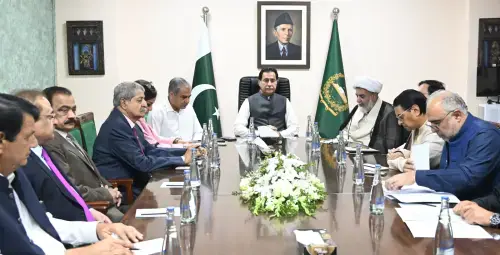
The Indian Motion Picture Producers Association (IMPPA) decided not to work with Pakistani artists. One of the members of the IMPAA, Mr Aggarwal, implied that the decision was punitive, based on the fact that allegedly none of the Pakistani artists had explicitly condemned the Uri attacks.
Maharashtra Navnirman Sena (MNS) warned Pakistani actors to leave India within two days, and some prominent Pakistani artists were relieved of the projects they were pursuing in India.
Cinema owners in Pakistan retaliated by vowing not to screen Indian movies till Indo-Pak relations are normalised. The age-old discussion on allowing Indian soap operas to be viewed in Pakistani homes has been expectedly reinvigorated.
This indicates poor comprehension of what India and Pakistan are actually in conflict with.
I expect more than just mild cognitive dissonance to be dealt with for the boy who grew up dancing to Indian tunes on Pakistani weddings.
Or the Indian cinephile whose films are adorned with musical contributions by Pakistani artists.
If I humbly remind you of the enemy artist's role in some of the most cherished memories from your childhood, would that cause you to shift uncomfortably in your seat?
No. You probably didn't realise you were paying homage to the enemy the time you played Antakshari with your friends; that memorable evening you laughingly sang Didi Tera Dewar Deewana when prompted to sing a song starting with the letter 'daal'.
Nor did it dawn upon an Indian college student that he was aiding and abetting the enemy, the day he listened to Rahat Fateh Ali's O re piya on repeat.
Surely, India, it is time to reconsider the acceptability of the foreign artist, writer, or researcher coming to you.
It is but a devious plot to help your director, your producer, and your publisher make his money; whilst entertaining your audiences and your readers.
And it may be time for Pakistan to rethink the need for an Indian academic to fly over to our universities to assist with our research projects.
Surely, the time has come for you to ball up your grandmother's special recipe for Bombay biryani, and hurl it across the Line of Control to the forbidden land whence it came.
But that's not the worst of it.
The significance of the Indo-Pak artistic bridge is more than just economic.
This bridge is a testimony to the humanity of the adversary.
It is a signal that the enemy is the lover who serenades his betrothed, as in a Bollywood film.
The enemy is the vulnerable woman that lights an earthen lamp in prayer of her husband's safe return, in an Indian TV show.
The enemy is the handsome Pakistani fellow with a goofy smile, who dances across the silver screen and makes your Indian family laugh.
The humanisation of the enemy poses a challenge to forces that profit off an atmosphere of fear and tension.
Why let the humanity of the enemy ruin the quality of our hate; deliberately depriving ourselves of the chance to reduce the other to the saffron beast or the green demon that we are assured he is?
Why let our conscience be burdened by the unnecessary thought that when the cannon roars, a lover, a dancer, a saas or a bahu gets hurt on the other end?
It could be fair to argue that, politically speaking, one side deserves a greater share of the blame than the other for the hostile situation at present.
But it makes poor sense to be burning down bridges that remind us that what we are dealing with – despite all political or military sins – is a human entity like ourselves.