22
22

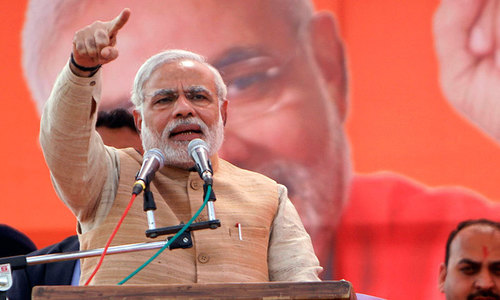
MUMBAI: When Indian Prime Minister Narendra Modi visited his hometown in Gujarat state to mark his birthday over the weekend, the national media focused on the detention there of a young Dalit rights activist.
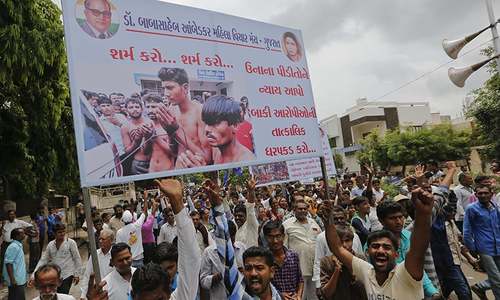
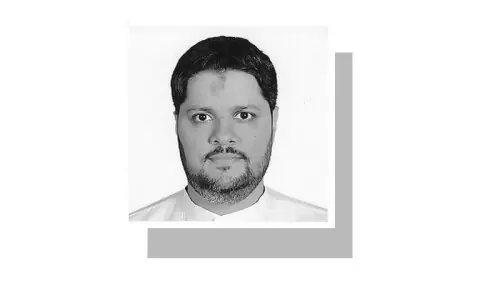
In just a few months since he led a protest after four Dalit youths were stripped and flogged by upper-caste Hindu men in Una, Gujarat, for allegedly skinning a dead cow, Jignesh Mevani has become the poster boy for Dalit rights in the country.
After first calling for dignity for the marginalised low-caste community, Mevani, 35, is now demanding land for landless Dalits and has threatened a wider protest from October 1.
“When we started the Una agitation, it was a protest against the increasing caste violence, and about justice for the community,” said Mevani, a former lawyer who was placed under house arrest by police as a “precautionary measure” during Modi's trip to Gujarat.
“But the injustice is related to landlessness: when you are landless, you have no power, and you're vulnerable to abuse and exploitation and violence,” he told the Thomson Reuters Foundation over the phone.
India banned caste-based discrimination in 1955, but centuries-old attitudes persist, and lower-caste groups including Dalits are among the most marginalised communities.
Dalits were once barred from public places including temples and water taps frequented by higher-caste Hindus.
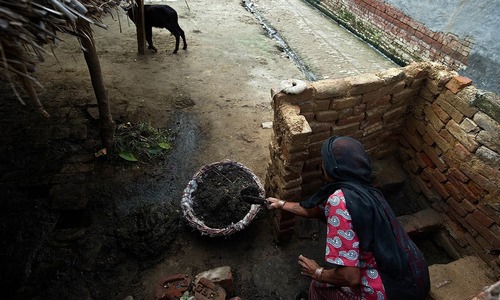
Many were restricted to jobs that were considered dirty or dangerous, such as manual scavenging and the disposal of animal carcasses.
At least half of India's lower-caste population is landless. Landless Dalits are at the bottom of the age-old social hierarchy, making them vulnerable to discrimination and attacks by upper-caste Hindus, including recent ones by hardline “gau rakshak” vigilantes who regard cows as sacred.
Five Acres
Mevani led thousands of Dalits in protest after the Una incident, pledging to boycott the “dirty” jobs traditionally thrust upon them. Since then, he has kept up the attacks with fiery speeches and rallies. Earlier this week, hundreds of Dalits rallied in Ahmedabad in Gujarat to demand land that is due to them.
“We are asking for just five acres of land for each landless Dalit family, which is legally their due,” said Mevani, who has filed a petition in the Gujarat high court over the issue.
“If the Gujarat (Agricultural) Lands Ceiling Act is imposed properly, there is enough excess land that can be distributed among landless Dalits in the state. There's also government land that has been allotted on paper, but not handed over,” he said.
Mevani, who sports big-framed spectacles and a stubble, and often wears a colourful scarf knotted at his neck, has found support from the national Dalit rights movement and is also being wooed by various political parties.
“What we are seeing in Gujarat is a spontaneous response by the community that has given momentum to the cause,” said Ramesh Nathan, general secretary of the National Dalit Movement for Justice in New Delhi.
“Land for the landless has been a long-standing demand of ours, and Mevani is helping mobilise the community and focus everyone's attention on this issue,” he said.
For Mevani, this was inevitable.
“We have been quiet for too long. We have no choice but to take to the streets,” he said.