Microhydel projects, affordable electricity


 10
10
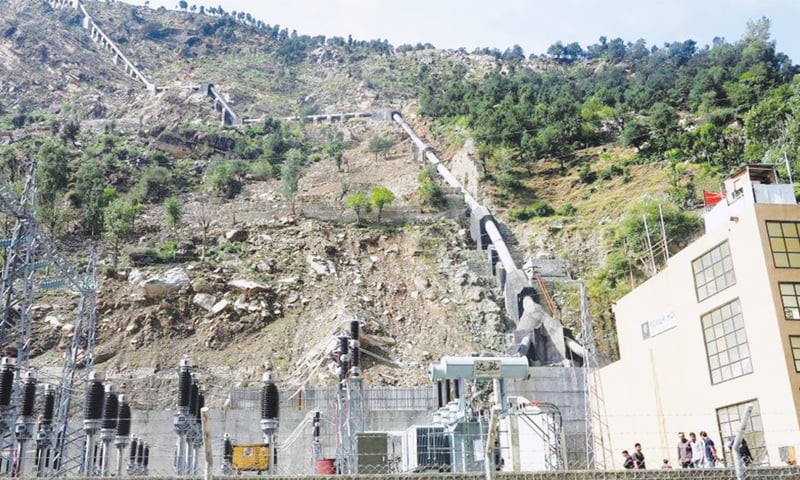

SINCE it took power in Khyber Pakhtunkhwa some three years ago, the Pakistan Tehreek-e-Insaf- led coalition government has intensfied efforts to set up micro-hydel projects in the province.
In all 75 micro-hydel projects of 3.1MW have been completed. The remaining 281 projects, due to be completed by 2019, will generate 31.9MW electricity.
When operational these projects will provide cheap and off-grid electricity to 350,000 people in far flung areas. The target is to enhance the number of micro-hydel projects to 1,000 to cater to 1m consumers.
When operational, these projects will provide cheap and off-grid electricity to 350,000 people in far flung areas. The target is to enhance the number of micro-hydel projects to 1,000 to cater to 1m consumers
Being executed by Pakhtunkhwa Energy Development Organisation (Pedo), the province has added 105MW of electricity since 2007.
Pedo’s CEO Akbar Ayub Khan told Dawn that the Asian Development Bank has showed its willingness to invest $300m in the construction of medium size power projects in the province. The ADB is organising a consortium to raise $1bn.
Mr Khan said Pedo has developed an investor-friendly KP Hydro Power Policy 2016 and associated guidelines. The investors’ response is very positive. He also disclosed that Pedo had offered seven projects with a generating capacity of 668MW to the private sector, involving an investment worth of $2bn. It is, for the first time, that it has received an overwhelming response from 56 companies for pre-qualification.
Pedo plans to build 21 long-term projects which would generate 3,631MW of energy at a cost of around $12bn. Since the government does not have enough funds to finance these projects, it is trying to bring in private investors, he said.
The feasibility studies of 18 projects have been completed. Of these, international tenders have been floated for six projects to invite private investors.
A 57MW project started by the previous government has been completed by the current regime. Of these, Machai and Ranolia were completed in July 2015. But they are not generating power because the transmission lines are not yet ready and the province is losing Rs40m every month.
Pedo had made payments to NTDC for extension of transmission lines to Machai, Mardan (2.6MW) and Ranolia, Kohistan (17MW) plants, which together generated 19.6MW of hydro power. The delay by the federal entity has held up the operations.
Pesco’s arrears to the Pehur Power Plant (12MW) have also piled up to Rs900m. It is only paying 20pc for the electricity supply. In February 2016, the federal government agreed to evolve a mechanism to settle the matter.
Besides this the PTI government has also started work on five projects having a total power generating capacity of 214MW which are at various stages of implementation. One or two out of them may be completed by 2019 and the remaining during the tenure of the next government.
Construction has been initiated on three projects — Jabori, Mansehra (10.2MW), Karora, Shangla (11.8MW) and Koto, Dir (40.8MW) - and formalities are at an advance stage for awarding contracts for two other projects — Lawi, Chitral (69MW) and Matiltan, Swat (84MW).
The province is negotiating with the ADB to sponsor a mega project of 300MW which will either be constructed in Balakot or Chitral.
KP has a Rs15bn hydropower development fund to initiate these projects and expects to receive past arrears of Rs70bn from the centre. The timely release of the funds can largely resolve the issue of cash required to initiate work on the identified projects.
The KP power policy revolves around two basic themes — an assured supply of cheap electricity to private sector-led management of the industrial zones and cheaper electricity offered to investors near the gas extracting spots.
Under the proposed policy, industrialists will be encouraged to set up their factories near hydropower generation sites. Electricity would be supplied to such industries from the new projects through wheeling charges by using the Wapda distribution network.
For example, Gadoon Amazai Industrial Estate in Swabi district will be offered electricity at concessional rates and priority basis from Pehur High Level-I hydropower plant. Investors in Dargai, located in semi-tribal Malakand Agency (earlier identified for setting up an industrial zone), will be offered electricity from the Malakand-III hydropower plant.
The Malakand-III power station generates 553m kilowatt per hour (kWh) of electricity annually. The cost of generation is around 2.18 cents per kWh. Wapda gets this electricity at a cheaper rate.
The PTI-led government intends to revise its agreements with Wapda, to get a higher per unit rate, and secure a maximum share of power for the industrial zone to be set up near plant sites.
Published in Dawn, Business & Finance weekly, August 1st, 2016