0
0

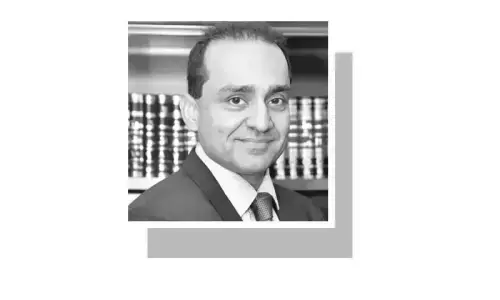
ISLAMABAD: Deploring the timing of the recent unrest in Indian-held Kashmir, former foreign secretary Salman Bashir said that the violence in the valley had erupted just ahead of a key summit in Islamabad, which could have been helpful in repairing the deteriorating ties between India and Pakistan.
He was referring to the 19th South Asian Association for Regional Cooperation (Saarc), which is due to be held in Islamabad in November this year.
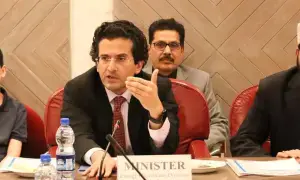
Speaking at ‘Troubled Neighbourhood: Pakistan’s Options’, a discussion organised by the Centre for Research and Security Studies (CRSS) on Thursday, he called on Islamabad and New Delhi to nominate special representatives to deal with the Kashmir issue.
Analysts call on Pakistan to abandon Cold War mentality, normalise relations with neighbours
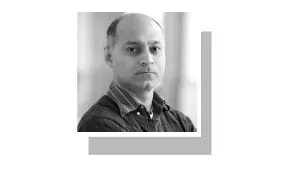
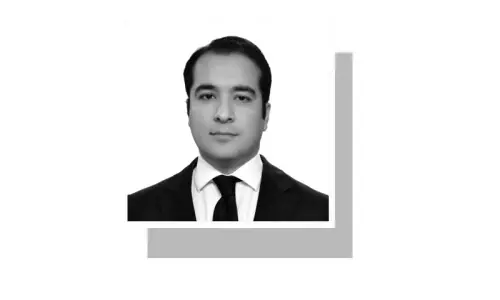
Criticising the policy of prioritising security issues over geo-economic integration in South Asia, Moeed Yusuf from the United States Institute of Peace (USIP) said that Pakistan was in dire need of a paradigm shift.
He pointed to the recent trade bloc created by India, Afghanistan and Iran, noting that Pakistan was absent from it.
He also criticised the Machiavellian approach to foreign policy, saying that it was doing more harm than good in the context of relations between India and Pakistan. The global narrative, he said, was against Pakistan, which had to shoulder the blame for the Afghan war. With Iran too, there was a dearth of rapprochement. A Machiavellian policy could not be the answer in a globalised world, he argued.
Mr Yusuf also took issue with the substitution of alliances, referring to it as “classic Cold War thinking”.
“If we lose the United States, then we have China – this mentality should no longer be the fallback position while formulating foreign policy,” he emphasized.
Praising Pakistan’s efforts to normalise tensions between Iran and Saudi Arabia, he stressed that this was the kind of approach needed to ease escalating tensions between neighbours.
He also pointed out that there was a very negative perception of Pakistan in the US and around the world. Pakistan is being remembered through the lens of terrorism because of its role in India and Afghanistan, etc, he said.
He recalled that in 1991, India did not have many friends. But in the two decades since, it had managed to change the narrative. Pakistan has many detractors but the global narrative can be changed by changing policies, he said Mr Yusuf also asserted that the China-Pakistan Economic Corridor was a significant project, which should be utilised in an effective manner.
Published in Dawn, July 29th, 2016