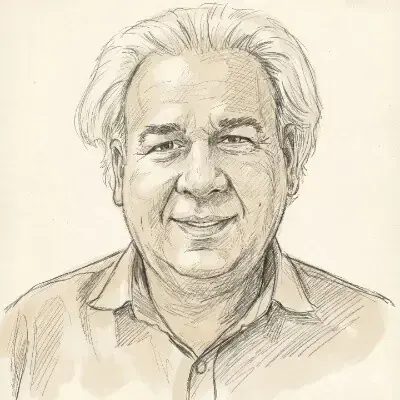
KARACHI: Colleagues, admirers and relatives of playwright and novelist Fatima Surayya Bajia recollected how she impacted their lives at an event held to commemorate her memory at the Arts Council on Wednesday. Bajia passed away on Feb 10.
Writer Anwar Maqsood, the younger brother of Bajia, said he had been writing for the past 50 years, and whatever he wrote Bajia would be the first one to see it. He lamented that on Wednesday he was able to write down nothing. He said Bajia had inherited classicism and a cultured disposition. He said she had a treasure trove of love, affection and care [for other people] and had tied the key to that treasure trove to the corner of her sari. Now the key had gone away, he bemoaned. He said she never complained about what she suffered in life and never spoke about whatever she received.
Mr Maqsood said Bajia was the eldest of 10 siblings, and each one had requested her to stay at their place, but she refused because her house was a place where she could take care of people, even of those whom she did not know. He said when she fell ill, her niece and nephew, Bunto and Azam, took care of her.
Former senator and federal minister Javed Jabbar said he first met Anwar Maqsood in 1963 at Karachi University, after which he started visiting his home. He said Bajia was the central figure in the home which had an atmosphere conducive to creativity. He said not just her, the entire family comprised unique personalities, one of which was Ahmed Maqsood Hameedi. He said people found living in the past romantic, but even in the 1960s there was decay and decline in society, and at the same time the process of evolution was taking place. He likened the life of a nation to a relay race, claiming that Bajia was a ‘super runner’. He said although she was five feet tall, in terms of her influence she was 10 feet in stature.
Bajia remembered at Arts Council reference
Imrana Maqsood, the wife of Anwar Maqsood, shared a disturbing incident. She said a little less than two years back when Bajia suffered a stroke she (Imrana) was asked by a journalist to write an article on her. She did. However, the article didn’t get published. Every time she would inquire about it, the journalist wouldn’t give a clear answer. On Feb 10, Bajia died. The next day her article appeared in the newspaper that the journalist worked for under her (Imrana’s) byline with the only exception that wherever she had used the present tense, it was changed into the past tense.
Hum TV’s Sultana Siddiqui said when Bajia started writing plays for television, it was not deemed good for women to act in them. Bajia was the one who lent credibility to the profession for women.
TV producer Qasim Jalali, with whom Bajia worked the most, said she wrote a number of serials (Shama, Asavri, etc) for him with numerous individual plays. He said she was not someone who would move away from tradition; rather, she would merge tradition and contemporariness seamlessly.
Adviser to the Sindh chief minister Maula Bux Chandio said he did not have the kind of relationship with Bajia that other speakers had but he was related to her in the context of humanity and social awareness. He said we couldn’t bring back those who had left our world. What we could do was to keep their traditions alive, he said.
Senior minister of Sindh Nisar Khuhro said Bajia was an icon and her work represented women’s emancipation.
Sindh governor Dr Ishratul Ibad said he had strong ties with Bajia’s family. He said Bajia would often phone him and even if he was in a meeting, he would make sure that he responded to her call. Recalling one such call, he said, a few years back when the situation in the city was worsening he received a call from her. She said she wanted to see him for two minutes. She came and during the meeting said that she was perturbed about the kind of identity that we had begun to assume. “Beta, yeh kia ho raha hai, hamari shanakht tabdeel ho rahi hai.” (Son, what’s happening? Our identity is being changed).The reference was to the aliases (Lamba, Chhota, etc) that were being associated with certain people. She asked him to promise her that he would fight and ensure that our identity did not change. He said the identity that Bajia talked about was Pakistan’s identity.
Talat Husain, Ahmed Shah, Arshad Mahmud, Shahid Rassam, Fazil Jamili, Dr Huma Mir, Iqbal Latif, Qudsia Akbar, Dr Ishrat Husain, Behroz Sabzwari, Anwar Iqbal, Hasina Moin, Prof Sahar Ansari, Mehta Akbar Rashdi and Prof Ajaz Farooqui also spoke.
Published in Dawn, March 3rd, 2016