25
25

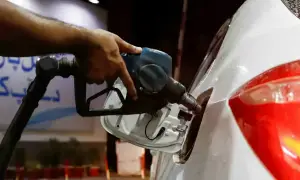
LAHORE: Federal Minister for Petroleum and Natural Resources Shahid Khaqan Abbasi says that gas shortage, particularly in Punjab and Khyber Pakhtunkhwa, will persist till next month’s end.
He told Dawn on Sunday that both the Sui Northern Gas Pipelines and Sui Southern Gas Company were unable to meet the demand, especially of domestic consumers.
This year’s gas crisis, he said, was worse than last year’s and “we are almost unable to” bridge the gap between supply and demand. The main problem is in Punjab and Khyber Pakhtunkhwa where there is a shortfall of 200 million cubic feet a day to 250, creating problems for domestic consumers.
The consumers require around 900 million cfd in winter in the two provinces and the shortage has caused mass protests across the country.
The domestic consumers in Sindh and Balochistan are facing low gas pressure, while those in the other two provinces are deprived of supply even in the cooking hours, despite the government having pledged to ensure uninterrupted supply to them after cutting off the industries for the season.
“What can we do in a situation when over 300,000 new domestic connections have been added to the system in Punjab and KP,” Mr Abbasi said.
He claimed that the situation in Sindh and Balochistan was not that bad.
“We are trying hard to bridge the demand-supply gap in Punjab and KP by increasing gas pressure,” the minister said.
Mr Abbasi said the use of compressors by domestic consumers to suck gas was another problem in maintaining the supply. Those receiving gas at the tail end of pipes are facing the problem. That is why a majority of them have installed compressors, creating problems for others.
“We are trying hard to stop them but we cannot detect exactly who is involved in this practice,” Mr Abbasi said.
When asked why was the government facing the problem despite importing liquefied natural gas from Qatar, he said the LNG was only for the industrial sector.
“We have added the LNG to the system after ‘re-gasifying’ it and then supplying it to the industrial sector. We cannot shift it to domestic consumers because that will cost a lot to them,” he said.
He said the LNG cost Rs900 per million British Thermal Units to the government, whereas a domestic consumer paid Rs100 per MMBTU. “How we can bridge this huge gap of Rs800,” he said, adding that the government might introduce a new tariff for the consumers, mainly large ones, if they desired to get uninterrupted supply of imported LNG.
Published in Dawn, December 21st, 2015