

VALLETTA: European and African leaders gathered on Wednesday for talks on joint action on the migration crisis, as Slovenia became the latest EU member to act on its own by barricading its border.
EU chiefs plan to offer their African counterparts funds at a summit in Malta in exchange for help stemming a migrant influx generating political and economic headaches for governments across Europe.
Germany was warned on Wednesday that processing and absorbing unprecedented numbers of asylum seekers could cost its taxpayers 14 billion euros next year.
The Malta summit, a rare gathering of around 50 leaders from the two continents, is the newest prong in the European Union’s quest for a joint strategy to deal with the biggest flow of refugees and migrants since World War II.
But Slovenia’s move underlined again the divisions within the 28-nation bloc over how to respond to the crisis.
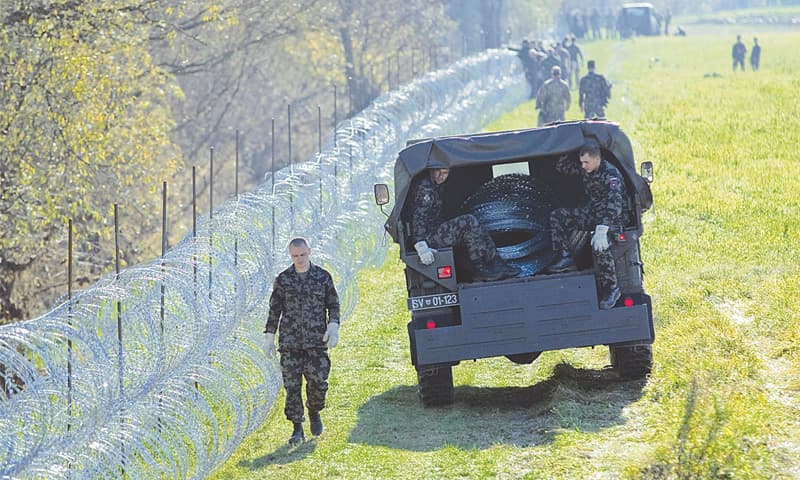
The Balkan state’s army began on Wednesday erecting a five-foot (1.5m) high razor-wire fence along stretches of its border with Croatia.
After Hungary sealed its borders last month, Slovenia found itself on the main Balkans route for the thousands of migrants who are landing in Greece every day after braving the short but dangerous sea crossing from Turkey.
Bureaucrats in Brussels, who pushed for the summit in Malta, oppose fences because they argue they simply redirect the flow of migrants and undermine efforts for a joint solution.
Croatian Interior Minister Ranko Ostojic labelled the barrier an “unneccessary waste of money” that Slovenia would be better spending on reception centres and temporary shelters.
The EU is offering up to 3.6 billion euros to persuade African leaders to take back more economic migrants, a step many African countries are reluctant to take for fear of losing the billions of dollars in remittances sent home by people working abroad.
European nations aim to boost cooperation with African countries to protect legitimate refugees, send home irregular migrants and stop those who smuggle them, while offering Africans expanded legal channels of migration.
As a carrot, the European Commission, the 28-nation EU’s executive arm, is setting up a 1.8-billion-euro “trust fund” for Africa and has urged member states to match that sum — although European sources said it was not sure that they would.
The money would go towards tackling the root causes of migration like poverty and conflict.“This new fund will help us working together to offer the people of Africa a better future at a time when young Africans often have a choice between unemployment or radicalisation,” said European Council President Donald Tusk.
In Khartoum, Hamad Elgizouli, the Sudanese government commissioner for refugees, called for more international support to check migrant smuggling as many Eritreans and Ethiopians enter eastern Sudan before heading to the Mediterranean.
Published in Dawn, November 12th, 2015
On a mobile phone? Get the Dawn Mobile App: Apple Store | Google Play