IT is indeed positive news that Urdu, the national language, is finally to get the status it deserves. The grace period given in 1973 for making arrangements to formally adopt Urdu for official and other purposes ended several years ago.
Today, what is really important is using Urdu as a medium of instruction and providing books in the national language for all levels of education. Obviously, it is not practically possible to overturn the medium of instruction currently in use all over Pakistan, and switch immediately from English to Urdu; however, what is doable is a conscious effort to provide books and lecture resources in Urdu to students, along with the same in English for the sake of clarity and comprehension.
Most of our students find it difficult to understand what books written in English have to say. Checking copies of students for many years, I have come to the conclusion that students, even at university level, really don’t understand the subject they are studying, mainly because of their lack of command over the English language. The unfortunate result is that most students resort to rote learning without understanding most of the content.
There is a need to promote the art of translation.
A small percentage of students are lucky enough to attend GCE O/A-level schools and get a chance to learn English properly and to cope with their subjects in that language. These students normally end up acquiring prestigious positions in society; the others who either go to low-fee private schools or public schools come under the ‘mediocre’ category.
Though different languages are spoken in Pakistan, even in this multilingual setting Urdu is providing a social cohesiveness which is perhaps the best reason for providing books and lecture resources in the national language. In Pakistan, fluency in English is linked to one’s social and economic class; however, a partial education in Urdu does increase chances of entry to high positions for all groups.
I am not saying that Pakistan should abandon English as a medium of instruction at all levels; nor do I suggest that students should access knowledge in Urdu only. In fact, schools, colleges and universities should seriously consider bilingual (English and Urdu) development of teaching material. Adopting this policy is essential for Pakistani students who fail to understand lectures or learning material made available to them in the English language.
In the absence of subject specialists who can write academic books for students in Urdu, the only alternative left is the translation of books written by international authors. The Higher Education Commission (HEC) has not, at least of late, announced any scheme to promote translation of books by university teachers. The result is that many university teachers who do opt to undertake this rigorous activity are discouraged in the absence of any guaranteed monetary benefit.
On the face of it, translating a book appears a fairly straightforward task; however, it is not that simple, and can be quite challenging. There is a need to actively promote the art of translation. Well-known translators should be hired by the HEC to conduct workshops at universities. To encourage the production of textbooks and lecture resources in Urdu, a criterion for promotion to the highest academic positions, such as professorship or associate professorship, could be to have demonstrated experience in translation — especially in an academician’s area of expertise.
Translation has historically played a major role in the spread of knowledge. Who can forget the famous Bayt al-Hikma (House of Wisdom) founded by Abbasid caliph al-Mamun in Baghdad in 830 AD? It was a huge library and academic centre specialising in the translation of knowledge, particularly philosophy and science, into Arabic. Similarly, in Muslim Spain, Toledo was a centre of culture for people speaking different languages; it had an institute of knowledge and translation (school of translators). The school translated the work of ancient philosophers and scientists into Arabic.
This enabled Arabic-speaking populations at the time to learn many traditional disciplines that were not known. Arabic-speaking scientists also contributed significant works.
The prime minister should take the initiative and establish a dedicated institution that can undertake the task of translating textbooks and other education resources into Urdu. The PML-N government should also rectify the lack of progress in building up learning resources in science and philosophy. The proposed institution can be set up for a limited period, say 10 years. After this, the task of translating educational material should be shifted to the universities. This will not only engage many scholars in the pursuit of academic excellence, it will also make knowledge more accessible to many who have not had the resources to ensure a sound education.
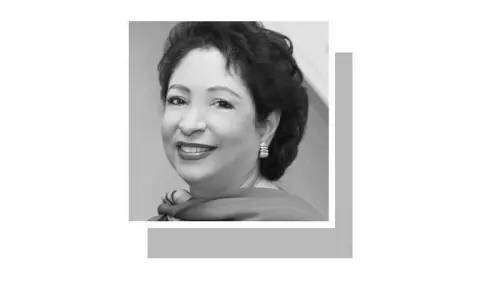
The writer is an assistant professor at the Federal Urdu University Karachi. The views do not reflect the opinion of the university.
Published in Dawn, August 30th, 2015
On a mobile phone? Get the Dawn Mobile App: Apple Store | Google Play