3
3


PARIS: Academics have criticised the British government for creating a “climate of fear” after the national library declined to store the world’s biggest collection of Taliban-related documents over concerns it could be prosecuted under terrorism laws.
A group of international researchers spent years putting together a trove of documents related to the Afghan Taliban, including official newspapers from their time in power, poems, maps, radio broadcasts, and several volumes of laws and edicts – digitising the estimated two to three million words and translating everything into English.
It was hoped the project, which was launched in 2012 and included members of the British Library on its advisory board, would prove an unprecedented resource for academics and officials trying to understand the movement and the ongoing insurgency in Afghanistan.
But despite hopes that the library would host a master copy of the digital collection, it got cold feet at the last minute, telling the project's organisers that they feared they could be in breach of Britain's increasingly stringent counter-terrorism laws.
'No recipes for making bombs'
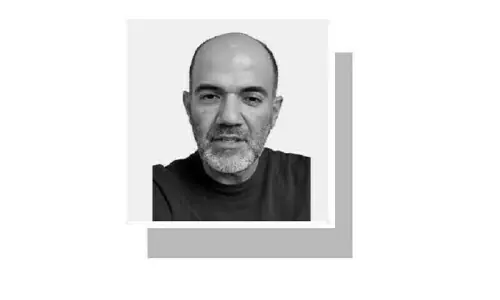
“It’s surprising and disappointing,” said Alex Strick van Linschoten, a Berlin-based author and researcher who helped spearhead the project.
“There’s no recipes for making bombs or anything like that. These are documents that would help people understand history, whether it’s Afghans trying to learn about their recent past, or outsiders wanting to understand the movement.
“Any scholar would realise that it’s essential to read primary documents related to your subject if you want to understand militant groups, but there is a climate of fear among academics who study this kind of material because UK law is very loose,” he said.
The British Library was reluctant to discuss the decision, referring queries to the government.
A spokeswoman confirmed that the library was “not currently able to acquire a copy of the archive”.
“It is a large digitised archive which contains material that could contravene the Terrorism Act,” she said.
“The legal advice received jointly by the British Library and other similar institutions advises against making this type of material accessible.” The Home Office declined to comment.
The Terrorism Acts of 2000 and 2006 make it an offence to “collect material which could be used by a person committing or preparing for an act of terrorism” and criminalise the “circulation of terrorist publications”.
But under the laws, police must also prove that the owners share the views expressed in the publications and intended them to be used for terrorism.
Other libraries interested
Members of the project say they have had interest from Stanford and Yale universities in the United States, as well as the Swiss national library, to host the documents instead.
“Being digitised, these records will inevitably be available anyway,” Peter Neumann, director of the International Centre for the Study of Radicalisation in London, wrote on Twitter.
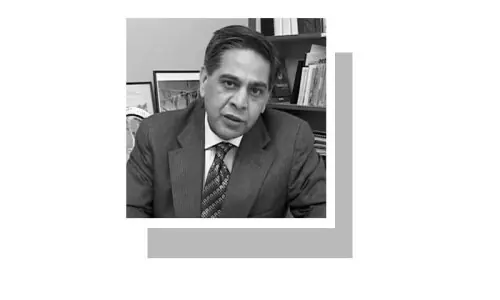
James Fitzgerald, a professor at Dublin City University and editor of the Critical Studies on Terrorism journal, said the library's decision to turn down the Taliban archive was “completely ridiculous”.
“It goes against the foundations of good research,” he said. “The whole point of a library is to house this kind of information, to house history. You can’t have good or new research without primary data.“
But he put the blame on the government for creating an atmosphere in which academics are increasingly nervous about touching anything to do with extremist groups.
“How much fear must there be to bring about a decision that is clearly ridiculous,” he said.
“This is a symptom of a creeping orthodoxy of UK legislation that is trying to enforce so-called British values,” said Fitzgerald, adding that the atmosphere has worsened since new guidelines were issued for universities calling on lecturers to look out for “potential radicals.”
“We're already seeing the effects. Some lecturers don’t want to do modules on terrorism anymore because they don’t want to come under suspicion.”
This is not the first time Strick van Linschoten and his colleague Felix Kuehn have faced controversy for their research work.
In 2012, they published “Poetry of the Taliban” through London publisher Hurst, which was criticised by a former British military commander for giving “the oxygen of publicity to an extremist group which is the enemy of this country.”