0
0


ISLAMABAD: In an age where knowledge-based economies are viewed as the recipe for progress, Pakistan has failed to invest in research and development of new technologies, which, in the government’s own words, has led to its fall in the Global Competi-tiveness Index (GCI).
The index assesses the ability of countries to provide high levels of prosperity to their citizens. This, in turn, depends on how productively a country uses available resources.
In the recently concluded session of the National Assembly, a report presented by Commerce Minister Khurram Dastgir Khan noted that Pakistan’s ranking in the GCI slid from 128 in 2013-14 to 129 in 2014-15. The report also detailed a number of factors that may have caused this decline.
Take a look: Pakistan ranked 129th in global competitiveness index
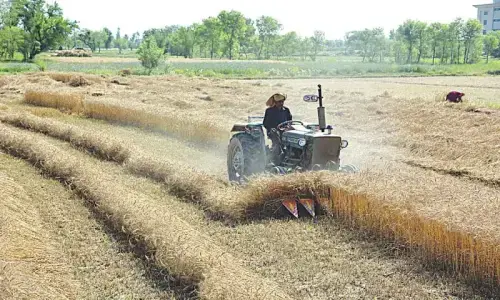
The key factor the minister highlighted was years of negligence by successive governments in the field of research and development. To substantiate, the minister used the example of Pakistan losing out to India with regards to its traditional rice exports.
“India has developed many basmati and basmati-like varieties during the last few years, whereas Pakistan has failed to develop any variety in the last 30. Consequently, traditional basmati rice markets are being gradually grabbed by India, who have high-yielding basmati varieties,” the minister said.
Research and development has traditionally been a low priority area, both in the public and private sectors. For instance, the minister said, there had been no efforts to develop new, high-yielding varieties of cotton or rice.
Talking to Dawn, eminent scientist and educationist Pervez Hoodbhoy said that over the years, the county unfortunately couldn’t develop a real research and development culture. “Merely producing PhDs and investing in equipment will not serve the purpose, we need to inculcate a scientific approach among our researchers.”
Presenting other causes which led to a $34 billion rise in the country’s import bill over the July 2014 —March 2015 period, which led to a trade deficit of $16.1 billion, the minister said that there had been a global decline in prices of cotton and rice.
These commodities have decisive importance among the country’s s exports and the decrease in prices has adversely affected exports.
The average unit price of non-basmati rice, which constitutes 70 per cent of Pakistan’s rice exports by value, declined by 2 per cent. Similarly, the average unit price of cotton and yarn have declined by 78 per cent and 10 per cent respectively.
Published in Dawn, May 23rd, 2015
On a mobile phone? Get the Dawn Mobile App: Apple Store | Google Play