Once upon a time, long before this era of murder and marauding; before religion was dragged into politics and the pulpit became imperiled, the mosque was a sacred space.
Exemplifying the spirit of prayer, of pause from the worldly and the contaminated, it welcomed all for the respite and reflection it offered.
The number of mosques has grown rapidly in Pakistan, but sadly, sacred space, where the vagaries of politics and contestation, accusation and blame, hate and bloodlust has shrunk to nearly nothing.
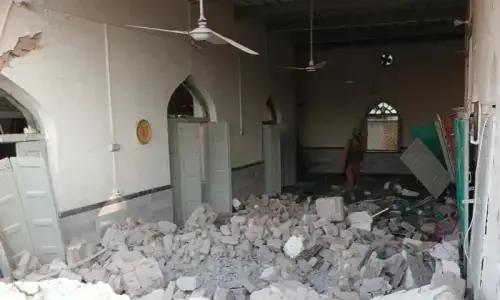
With the passage of each year, the status of the mosque, as a sacred space, has been encroached by political and ideological contestation. With a barrage of bombs and bullets, of bodies going in alive and emerging dead, it has become like so much else in war-torn Pakistan: a target of terror.
The infection is often an internal affliction; the pulpits of too many mosques in too many towns have become venues for the preaching of hatred and strife, for invocations of violence and bloodshed.
As the recordings made and literature collected from so many mosques around the country has shown, to reclaim the sanctity of the mosque, there must be the reclamation of the pulpit.
Also read: Hate material in books has impacted entire generations
It is for just this reason that the verdict in a case decided this past Tuesday was such a welcome one. A judge in Kasur hearing a case against a cleric who was accused of inciting violence against a particular sect, sentenced the accused to five years in prison.
The case was decided under Section 9 of the Anti-Terrorism Act, which covers those charged with inciting violence at a public gathering. In its case against the cleric, the prosecution presented a video recording that clearly showed the cleric making the statements to a gathering of those who had come to pray.
Editorial: Silencing hate speech
In an age when nearly everyone has access to cameras on cellular phones, every Pakistani who worships at a mosque and believes in the urgency of reclaiming the venue as a hate free zone can be a help in this regard.
The sanctity of sacred space cannot be retained when the purpose of words spoken within is the whetting of murderous mobs; in recent months too, many of these have been riled up, killed and inflicted damage.
If ordinary citizens become conscripts in this effort against hatred, gather up evidence against those previously unchecked then, perhaps, the outcome for the cleric in Kasur will become a deterrent to numerous others, who also engage in the same transactions of evoking rage and violence.
Uprooting hatred can, undoubtedly seem a daunting task in a time where differences of denomination and ideology, ethnicity and affinity have all been distorted into reasons to kill; but all journeys begin with a single step, one positive act for the reclamation of the sacred.