1
1

KOHAT: The struggle for the independence of judiciary and right to speech and justice is replete with instances where prominent people of the society have questioned rulings from kiosks, church and palace. And these phenomena will live with us as far as the dictators have the support of few influential over the vast majority.
In English history Edward Coke was the first to raise voice against King James I for the independence of judiciary braving the consequences. Coke lived with a motto ‘Lex est tutissima cassis’ (the Law is the safest shield), which made him to say later that “the Law is the surest sanctuary that a man can take, and the strongest fortress to protect the weakest of all.”
In the history of our country, the then chief justice of West Pakistan High Court Mohammad Rustam Kayani is the pioneer of launching the movement for independent judiciary. He openly challenged the writ of Mohammad Ayub Khan in a scathing manner while remaining in service.
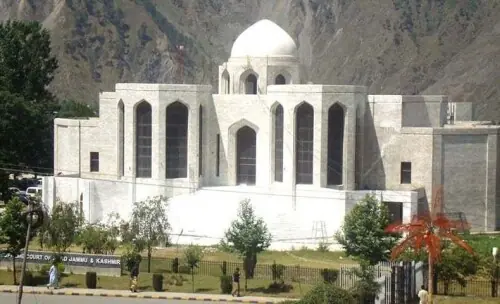
The last abode, bungalow of MR Kayani in shambles
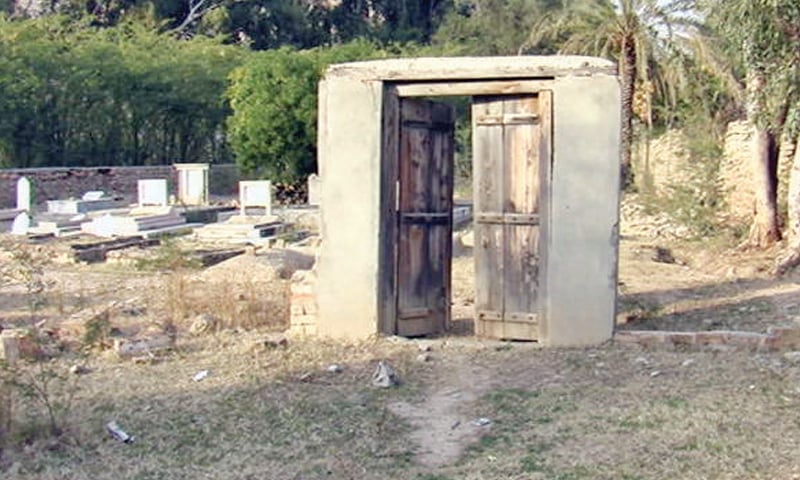
The outspoken dead honest and fearless late chief justice of Pakistan, Mohammad Rustam Kayani lies buried two kilometres on the west of Kohat city in complete oblivion in Kayani graveyard.
The graveyard has a wooden door but is without walls to protect the important graves like of his brothers, communication and jails minister Malikur Rehman Kayani, Malik Gulzar Ahmed Kayani, West Pakistan IGP and his father Abdul Samad Kayani, mother and other close relatives.
No birthday or death anniversary is observed of such a great hero. He was a permanent subject of textbooks at primary level decades ago but now it has been removed from the curriculum.
The government has been asked repeatedly to declare the site, including his bungalow, national heritage and construct a library there. Mr Kayani’s son, who settled in Lahore after the death of his father and never visited Kohat, once called this scribe and asked him to stop talking to his relatives about his legendary father and instead contact him.
During a recent visit to the graveyard, it was noticed that the broken stone of Mr Kayani’s grave was used as a support to place kettle for making tea by the local shepherds. All requests made for preservation of the site have fallen on deaf ears.
In one of his books, Mr Kayani quotes a verse from the Holy Quran that God created humans and taught them to speak. So if they are
The forgotten hero of independence of judiciary unable to tell about their sufferings, they deny the purpose of their creation.
He used to travel in the length and breadth of East and West Pakistan to address vast audience mostly officers, lawyers and judges. He used to criticise the rulers till his death.
He used to participate in official functions where he and Ayub Khan came face to face with each other. Nobody heard about any clash of Mr Kayani with police or mishandling by unidentified persons at any stage, although sometimes he became unbearable for the bureaucracy when he made nasty remarks against the ruler.
The foreword of his book ‘The Whole Truth’ was written by Ayub Khan despite his difference of opinion with Mr Kayani.
“It is often said that our legal system facilitates dispensation of law rather than justice. But in these pages at least Mr Kayani has proved an exception which is necessary for the life of every rule: he is cleverly winked over the law and done more than justice to the themes of his choice. I have enjoyed reading these articles and even where I don’t find myself in agreement with the views of Mr Kayani, I am all for defending his right to express them freely,” Ayub Khan writes in the foreword of the book.
Addressing President Ayub Khan during his visit to Civil Services Academy, Mr Kayani said clearly: “A government like this is not more than excuse for the people abroad and in Pakistan it is accepted as Hobson’s choice, which should not continue for even a day”.
He used to write his speeches himself and discussed international and national issues with particular reference to situation in Pakistan.
Mr Kayani died suddenly in 1962 in Chittagong where he had gone to address a meeting as president of CSP officers association the position which he retained since 1956 when he was serving on the executive side.
His master’s in English and Persian and later on education in England helped him a lot in his literary work. His speeches are available in several books including ‘The Whole Truth’, ‘A Judge May Laugh’, ‘Half Truths’, ‘Some More Truth’, ‘Afkar-i-Pareshan’ and ‘Maktoob-i-Kayani’.
Educationist and poet Prof Shujaat Ali Rahi said that Chief Justice Mohammad Rustam Kayani was popular among the elite and the common alike. He used to address gathering of ICS/CSP officers lawyers and other functions.
His fight for freedom of expression and against the rule of Ayub Khan was very fierce and he hardly missed a chance to point out the dictatorial policies under the martial law in an interesting and extemporaneous way.
His contemporaries say that he would use a pencil when it would become difficult to hold it in fingers.
Once a senior officer went to his home to meet him but mistook him for a servant as he was watering plants in his lawns. The guest asked him arrogantly to call Mr Kayani. He went inside and then came back and told his guest that he was Rustam Kayani. The guest was so ashamed that he left immediately.
Published in Dawn, February 2nd, 2015
On a mobile phone? Get the Dawn Mobile App: Apple Store | Google Play